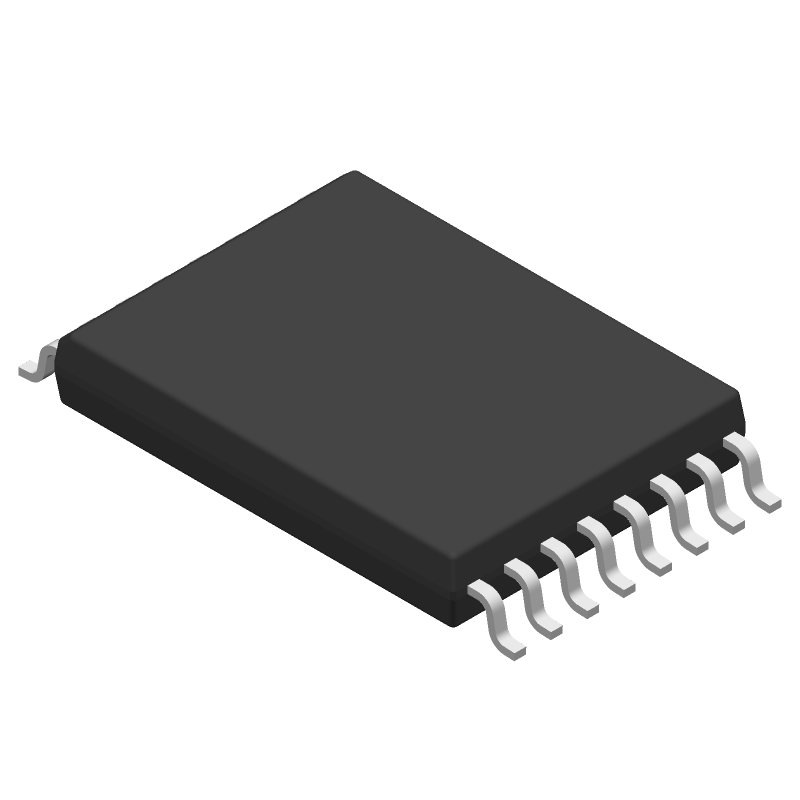
Tip: Data for a part may vary between manufacturers. You can filter for manufacturers on the top of the page next to the part image and part number.
ISO7841FDWWR Information
ISO7841FDWWR by Texas Instruments is an Other Interface IC.
Other Interface ICs are under the broader part category of Drivers And Interfaces.
A driver controls the current or voltage delivered to components like LCDs or motors, while an interface component connects systems for data transfer and control. Read more about Drivers And Interfaces on our Drivers And Interfaces part category page.
US Tariff Estimator: ISO7841FDWWR by Texas Instruments
Calculations from this tool are estimations only for imports into the United States. Please refer to the distributor or manufacturer and reference official US government sources and authorities to verify any final purchase costs.
This table gives cross-reference parts and alternative options found for ISO7841FDWWR. The Form Fit Function (FFF) tab will give you the options that are more likely to serve as direct pin-to-pin alternates or drop-in parts. The Functional Equivalents tab will give you options that are likely to match the same function of ISO7841FDWWR, but it may not fit your design. Always verify details of parts you are evaluating, as these parts are offered as suggestions for what you are looking for and are not guaranteed.
The ISO7841FDWWR can support data rates up to 100 Mbps, making it suitable for high-speed applications.
The ISO7841FDWWR has a high common-mode transient immunity of ±100 kV/μs, ensuring reliable operation in noisy environments.
The typical propagation delay of the ISO7841FDWWR is around 10 ns, making it suitable for high-speed applications where timing is critical.
Yes, the ISO7841FDWWR is designed to operate in harsh industrial environments, with an operating temperature range of -40°C to 125°C and high immunity to electromagnetic interference (EMI).
The ISO7841FDWWR has built-in power-on and power-off protection, ensuring that the device remains in a safe state during power-up and power-down sequences.