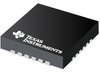

| Part Number | Manufacturer | Composite Price | Description | Compare |
|---|---|---|---|---|
| LMX2491RTWR | Texas Instruments | $4.8339 | PLL Frequency Synthesizer, PQCC24 | LMX2491RTWT vs LMX2491RTWR |
| ADF4150BCPZ-RL7 | Analog Devices Inc | $4.9008 | PLL Frequency Synthesizer | LMX2491RTWT vs ADF4150BCPZ-RL7 |
Part Details for LMX2491RTWT by Texas Instruments
Results Overview of LMX2491RTWT by Texas Instruments
- Distributor Offerings: (6 listings)
- Number of FFF Equivalents: (0 replacements)
- Tariff Estimator: (Available) NEW
- Number of Functional Equivalents: (2 options)
- CAD Models: (Available)
- Part Data Attributes: (Available)
- Reference Designs: (Not Available)
Tip: Data for a part may vary between manufacturers. You can filter for manufacturers on the top of the page next to the part image and part number.
Applications
Aerospace and Defense
LMX2491RTWT Information
LMX2491RTWT by Texas Instruments is a PLL or Frequency Synthesis Circuit.
PLL or Frequency Synthesis Circuits are under the broader part category of Signal Circuits.
A signal is an electronic means of transmitting information, either as an analog signal with continuous values or a digital signal with discrete values. Signals are used in various systems and networks. Read more about Signal Circuits on our Signal Circuits part category page.
Available Datasheets
| Part # | Manufacturer | Description | Datasheet |
|---|---|---|---|
| LMX2491RTWT | Texas Instruments | 6.4GHz Low Noise Fractional N PLL With Ramp/Chirp Generation 24-WQFN -40 to 85 |
Price & Stock for LMX2491RTWT
| Part # | Distributor | Description | Stock | Price | Buy | |
|---|---|---|---|---|---|---|
|
DISTI #
296-45092-2-ND
|
DigiKey | IC FREQ SYNTH 24WQFN Min Qty: 250 Container: Tape & Reel |
331 Tape & Reel |
|
$6.8528 / $7.2530 | Buy Now |
|
DISTI #
296-45092-6-ND
|
DigiKey | IC FREQ SYNTH 24WQFN Min Qty: 1 Container: Digi-Reel |
331 Digi-Reel® |
|
$7.5760 / $11.3400 | Buy Now |
|
DISTI #
595-LMX2491RTWT
|
Mouser Electronics | Phase Locked Loops - PLL 6.4-GHz low noise fr actional-N PLL with A 595-LMX2491RTWR RoHS: Compliant | 493 |
|
$6.7300 / $11.3300 | Buy Now |
|
|
Chip Stock | 6.4-GHz low noise fractional-N PLL with ramp/chirp generation 24-WQFN -40 to 85 | 6070 |
|
RFQ | |
|
|
Vyrian | PLL Frequency Synthesizer, PQCC24 | 5239 |
|
RFQ | |
|
|
Win Source Electronics | 6.4GHZ LOW NOISE FRACTIONAL N PL | 4570 |
|
$6.5808 / $9.8711 | Buy Now |
US Tariff Estimator: LMX2491RTWT by Texas Instruments
Calculations from this tool are estimations only for imports into the United States. Please refer to the distributor or manufacturer and reference official US government sources and authorities to verify any final purchase costs.
LMX2491RTWT CAD Models
-
Part Symbol
-
Footprint
-
3D Model
Available Download Formats
By downloading CAD models, you agree to our Terms & Conditions and Privacy Policy
LMX2491RTWT Part Data Attributes
|
|
LMX2491RTWT
Texas Instruments
Buy Now
Datasheet
|
Compare Parts:
LMX2491RTWT
Texas Instruments
PLL Frequency Synthesizer, PQCC24
|
| Pbfree Code | Yes | |
| Rohs Code | Yes | |
| Part Life Cycle Code | Active | |
| ECCN Code | EAR99 | |
| HTS Code | 8542.39.00.90 | |
| Date Of Intro | 2016-10-16 | |
| Analog IC - Other Type | Pll Frequency Synthesizer | |
| JESD-30 Code | S-PQCC-N24 | |
| JESD-609 Code | e3 | |
| Length | 4 Mm | |
| Moisture Sensitivity Level | 3 | |
| Number of Functions | 1 | |
| Number of Terminals | 24 | |
| Operating Temperature-Max | 85 °C | |
| Operating Temperature-Min | -40 °C | |
| Output Frequency-Max | 6400 Mhz | |
| Package Body Material | Plastic/Epoxy | |
| Package Code | HVQCCN | |
| Package Shape | Square | |
| Package Style | Chip Carrier, Heat Sink/Slug, Very Thin Profile | |
| Peak Reflow Temperature (Cel) | 260 | |
| Seated Height-Max | 0.8 Mm | |
| Supply Voltage-Max (Vsup) | 3.45 V | |
| Supply Voltage-Min (Vsup) | 3.15 V | |
| Supply Voltage-Nom (Vsup) | 3.3 V | |
| Surface Mount | Yes | |
| Temperature Grade | Industrial | |
| Terminal Finish | Matte Tin (Sn) - Annealed | |
| Terminal Form | No Lead | |
| Terminal Pitch | 0.5 Mm | |
| Terminal Position | Quad | |
| Time@Peak Reflow Temperature-Max (s) | 30 | |
| Width | 4 Mm |
Alternate Parts for LMX2491RTWT
This table gives cross-reference parts and alternative options found for LMX2491RTWT. The Form Fit Function (FFF) tab will give you the options that are more likely to serve as direct pin-to-pin alternates or drop-in parts. The Functional Equivalents tab will give you options that are likely to match the same function of LMX2491RTWT, but it may not fit your design. Always verify details of parts you are evaluating, as these parts are offered as suggestions for what you are looking for and are not guaranteed.
LMX2491RTWT Frequently Asked Questions (FAQ)
-
Texas Instruments provides a recommended PCB layout in the datasheet, but it's also important to follow general high-frequency PCB design guidelines, such as using a solid ground plane, minimizing trace lengths, and using 50-ohm transmission lines for RF signals.
-
Optimizing performance requires understanding the specific requirements of your application, such as frequency range, power level, and noise tolerance. TI provides application notes and design guides that can help, and it's also recommended to consult with TI's technical support team or a experienced RF engineer.
-
The LMX2491RTWT is specified to operate from -40°C to 85°C, but it's important to note that the device's performance may degrade at higher temperatures. It's recommended to follow the thermal design guidelines in the datasheet and to consider using thermal management techniques such as heat sinks or thermal interfaces.
-
The LMX2491RTWT requires a specific biasing and configuration to operate correctly. TI provides a detailed description of the recommended biasing and configuration in the datasheet, and it's also recommended to consult with TI's technical support team or a experienced RF engineer to ensure the device is properly configured for your specific application.
-
The LMX2491RTWT can be susceptible to noise and interference from various sources, including power supply noise, thermal noise, and electromagnetic interference. To mitigate these effects, it's recommended to use proper power supply decoupling, shielding, and grounding techniques, as well as to follow good RF design practices such as using filters and attenuators.