| Part Number | Manufacturer | Composite Price | Description | Compare |
|---|---|---|---|---|
| TLC279CDR | Texas Instruments | $1.3752 | Operational Amplifier, 4 Func, 900uV Offset-Max, CMOS, PDSO14 | TLC279CD vs TLC279CDR |
| TLC279CDRG4 | Texas Instruments | Check for Price | Operational Amplifier, 4 Func, 1500uV Offset-Max, CMOS, PDSO14 | TLC279CD vs TLC279CDRG4 |
| TLC279CDG4 | Texas Instruments | Check for Price | Operational Amplifier, 4 Func, 900uV Offset-Max, CMOS, PDSO14 | TLC279CD vs TLC279CDG4 |
Part Details for TLC279CD by Texas Instruments
Results Overview of TLC279CD by Texas Instruments
- Distributor Offerings: (7 listings)
- Number of FFF Equivalents: (3 replacements)
- Tariff Estimator: (Available) NEW
- Number of Functional Equivalents: (8 options)
- CAD Models: (Available)
- Part Data Attributes: (Available)
- Reference Designs: (Not Available)
Tip: Data for a part may vary between manufacturers. You can filter for manufacturers on the top of the page next to the part image and part number.
Applications
Energy and Power Systems
Renewable Energy
Automotive
TLC279CD Information
TLC279CD by Texas Instruments is an Operational Amplifier.
Operational Amplifiers are under the broader part category of Amplifier Circuits.
Amplifier circuits use external power to increase the amplitude of an input signal. They can be used to perform linear amplifications or logarithmic functions. Read more about Amplifier Circuits on our Amplifier Circuits part category page.
Price & Stock for TLC279CD
| Part # | Distributor | Description | Stock | Price | Buy | |
|---|---|---|---|---|---|---|
|
DISTI #
296-7366-5-ND
|
DigiKey | IC CMOS 4 CIRCUIT 14SOIC Min Qty: 1 Container: Tube |
3 Tube |
|
$3.9800 | Buy Now |
|
|
Bristol Electronics | Op Amp Quad Precision Amplifier 16V 14-Pin SOIC Tube | 1451 |
|
RFQ | |
|
|
Quest Components | QUAD OP-AMP, 1500 UV OFFSET-MAX, 1.7 MHZ BAND WIDTH, PDSO14 | 320 |
|
$2.0905 / $3.3900 | Buy Now |
|
|
Quest Components | QUAD OP-AMP, 1500 UV OFFSET-MAX, 1.7 MHZ BAND WIDTH, PDSO14 | 80 |
|
$1.6950 / $3.3900 | Buy Now |
|
|
ComSIT USA | LINCMOS PRECISION QUAD OPERATIONAL AMPLIFIER Operational Amplifier, 4 Func, 900uV Offset-Max, CMOS, PDSO14 ECCN: EAR99 RoHS: Not Compliant |
|
|
RFQ | |
|
|
Chip 1 Exchange | INSTOCK | 50 |
|
RFQ | |
|
|
Vyrian | Operational Amplifier, 4 Func, 1500uV Offset-Max, CMOS, PDSO14 | 6488 |
|
RFQ |
US Tariff Estimator: TLC279CD by Texas Instruments
Calculations from this tool are estimations only for imports into the United States. Please refer to the distributor or manufacturer and reference official US government sources and authorities to verify any final purchase costs.
TLC279CD CAD Models
-
Part Symbol
-
Footprint
-
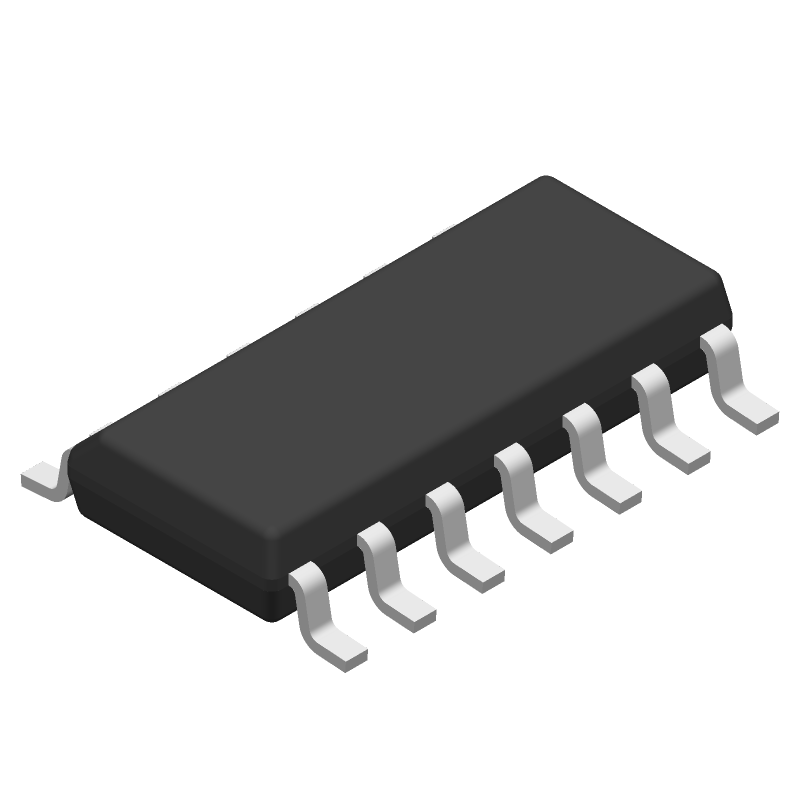
3D Model
Available Download Formats
By downloading CAD models, you agree to our Terms & Conditions and Privacy Policy
TLC279CD Part Data Attributes
|
|
TLC279CD
Texas Instruments
Buy Now
Datasheet
|
Compare Parts:
TLC279CD
Texas Instruments
Operational Amplifier, 4 Func, 900uV Offset-Max, CMOS, PDSO14
|
| Rohs Code | Yes | |
| Part Life Cycle Code | Obsolete | |
| Part Package Code | SOIC | |
| Pin Count | 14 | |
| ECCN Code | EAR99 | |
| HTS Code | 8542.33.00.01 | |
| Date Of Intro | 1988-03-17 | |
| Amplifier Type | Operational Amplifier | |
| Architecture | Voltage-Feedback | |
| Average Bias Current-Max (IIB) | 0.00006 µA | |
| Bias Current-Max (IIB) @25C | 0.00006 µA | |
| Common-mode Reject Ratio-Min | 65 Db | |
| Common-mode Reject Ratio-Nom | 80 Db | |
| Frequency Compensation | Yes | |
| Input Offset Current-Max (IIO) | 0.00006 µA | |
| Input Offset Voltage-Max | 900 µV | |
| JESD-30 Code | R-PDSO-G14 | |
| JESD-609 Code | e4 | |
| Length | 8.65 Mm | |
| Low-Bias | Yes | |
| Low-Offset | No | |
| Micropower | No | |
| Moisture Sensitivity Level | 1 | |
| Number of Functions | 4 | |
| Number of Terminals | 14 | |
| Operating Temperature-Max | 70 °C | |
| Operating Temperature-Min | ||
| Package Body Material | Plastic/Epoxy | |
| Package Code | SOP | |
| Package Equivalence Code | SOP14,.25 | |
| Package Shape | Rectangular | |
| Package Style | Small Outline | |
| Packing Method | Tube | |
| Peak Reflow Temperature (Cel) | 260 | |
| Power | No | |
| Programmable Power | No | |
| Qualification Status | Not Qualified | |
| Seated Height-Max | 1.75 Mm | |
| Slew Rate-Nom | 3.6 V/Us | |
| Supply Current-Max | 6.4 Ma | |
| Supply Voltage Limit-Max | 18 V | |
| Supply Voltage-Nom (Vsup) | 5 V | |
| Surface Mount | Yes | |
| Technology | Cmos | |
| Temperature Grade | Commercial | |
| Terminal Finish | Nickel/Palladium/Gold (Ni/Pd/Au) | |
| Terminal Form | Gull Wing | |
| Terminal Pitch | 1.27 Mm | |
| Terminal Position | Dual | |
| Time@Peak Reflow Temperature-Max (s) | 30 | |
| Unity Gain BW-Nom | 1700 | |
| Voltage Gain-Min | 10000 | |
| Wideband | No | |
| Width | 3.9 Mm |
Alternate Parts for TLC279CD
This table gives cross-reference parts and alternative options found for TLC279CD. The Form Fit Function (FFF) tab will give you the options that are more likely to serve as direct pin-to-pin alternates or drop-in parts. The Functional Equivalents tab will give you options that are likely to match the same function of TLC279CD, but it may not fit your design. Always verify details of parts you are evaluating, as these parts are offered as suggestions for what you are looking for and are not guaranteed.
TLC279CD Frequently Asked Questions (FAQ)
-
The recommended operating voltage range for TLC279CD is 4.5V to 16V, although it can operate up to 18V with reduced performance.
-
To ensure stable operation during power-up, it's recommended to add a 10nF to 100nF capacitor between the VCC pin and GND to filter out noise and voltage spikes.
-
The maximum output current of TLC279CD is 2.5mA per channel, although it's recommended to limit the output current to 1.5mA per channel for reliable operation.
-
No, TLC279CD is not designed to be used as a voltage regulator. It's a quad operational amplifier (op-amp) intended for signal amplification and conditioning, not voltage regulation.
-
To reduce noise and oscillations, use proper PCB layout techniques, add decoupling capacitors (e.g., 10uF to 100uF) between VCC and GND, and consider adding a noise filter (e.g., RC filter) at the input or output stages.