Tip: Data for a part may vary between manufacturers. You can filter for manufacturers on the top of the page next to the part image and part number.
ApplicationsEducation and ResearchInternet of Things (IoT)Computing and Data StorageAerospace and DefenseHealthcareTelecommunicationsAutomotive
TLE2021MD Information
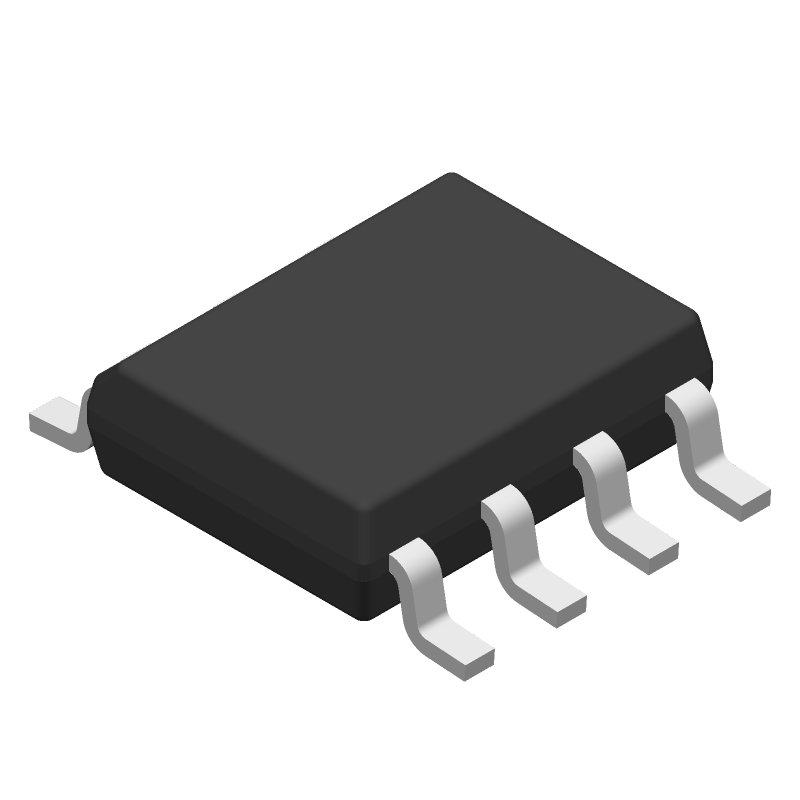
TLE2021MD by Texas Instruments is an Operational Amplifier.
Operational Amplifiers are under the broader part category of Amplifier Circuits.
Amplifier circuits use external power to increase the amplitude of an input signal. They can be used to perform linear amplifications or logarithmic functions. Read more about Amplifier Circuits on our Amplifier Circuits part category page.
US Tariff Estimator: TLE2021MD by Texas Instruments
Calculations from this tool are estimations only for imports into the United States. Please refer to the distributor or manufacturer and reference official US government sources and authorities to verify any final purchase costs.
This table gives cross-reference parts and alternative options found for TLE2021MD. The Form Fit Function (FFF) tab will give you the options that are more likely to serve as direct pin-to-pin alternates or drop-in parts. The Functional Equivalents tab will give you options that are likely to match the same function of TLE2021MD, but it may not fit your design. Always verify details of parts you are evaluating, as these parts are offered as suggestions for what you are looking for and are not guaranteed.
The recommended operating voltage range for the TLE2021MD is 4.5V to 16V, although it can operate up to 18V with reduced performance.
To ensure proper biasing, connect the VCC pin to a stable voltage source, and decouple it with a 0.1uF capacitor to ground. Also, ensure the input voltage is within the recommended range and the output is properly terminated.
The maximum output current of the TLE2021MD is 10mA per channel, although it's recommended to limit the output current to 5mA per channel for optimal performance and to prevent overheating.
To handle thermal considerations, ensure good airflow around the device, use a heat sink if necessary, and avoid operating the device at high temperatures (above 125°C) for extended periods.
For optimal performance, use a symmetrical layout, keep the input and output traces short and separate, and avoid running high-frequency signals near the device's power pins.