Tip: Data for a part may vary between manufacturers. You can filter for manufacturers on the top of the page next to the part image and part number.
ApplicationsEducation and ResearchInternet of Things (IoT)Computing and Data StorageAerospace and DefenseHealthcareTelecommunicationsAutomotive
TLC271CP Information
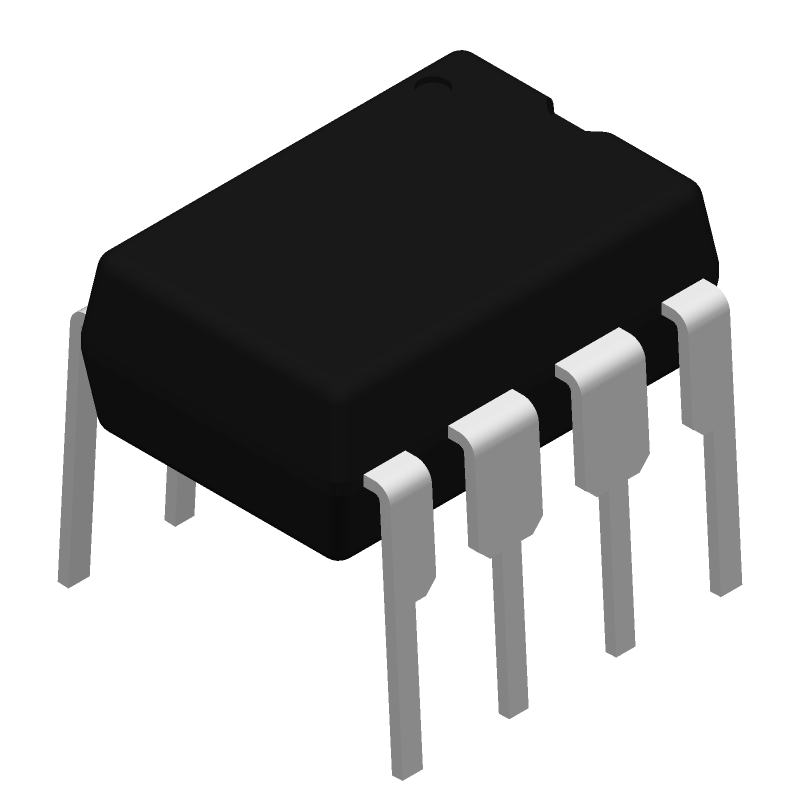
TLC271CP by Texas Instruments is an Operational Amplifier.
Operational Amplifiers are under the broader part category of Amplifier Circuits.
Amplifier circuits use external power to increase the amplitude of an input signal. They can be used to perform linear amplifications or logarithmic functions. Read more about Amplifier Circuits on our Amplifier Circuits part category page.
US Tariff Estimator: TLC271CP by Texas Instruments
Calculations from this tool are estimations only for imports into the United States. Please refer to the distributor or manufacturer and reference official US government sources and authorities to verify any final purchase costs.
This table gives cross-reference parts and alternative options found for TLC271CP. The Form Fit Function (FFF) tab will give you the options that are more likely to serve as direct pin-to-pin alternates or drop-in parts. The Functional Equivalents tab will give you options that are likely to match the same function of TLC271CP, but it may not fit your design. Always verify details of parts you are evaluating, as these parts are offered as suggestions for what you are looking for and are not guaranteed.
The TLC271CP can operate from -40°C to 125°C, making it suitable for a wide range of applications.
To prevent damage, handle the TLC271CP by the body, avoid touching the pins, and store it in an anti-static bag or wrap it in anti-static material.
To prevent latch-up, power on the TLC271CP with VCC first, followed by the input signals. Ensure VCC is stable before applying input signals.
Yes, the TLC271CP is suitable for high-reliability applications due to its radiation-hardness and compliance with NASA and ESA standards.
To minimize power consumption, use a low-power mode, reduce the clock frequency, and optimize the input signal transitions to minimize switching activity.