
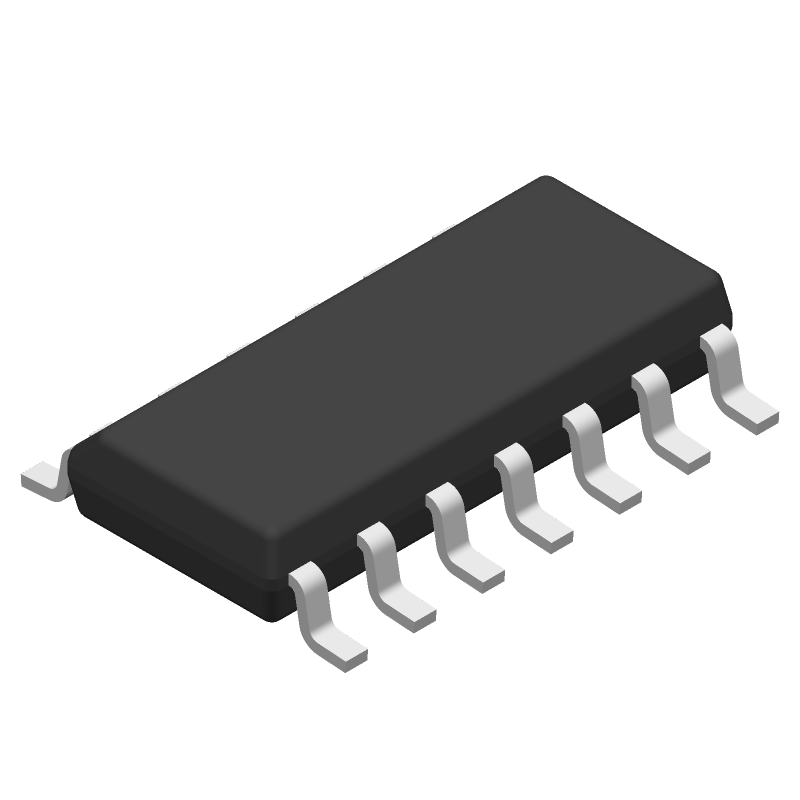
| Part Number | Manufacturer | Composite Price | Description | Compare |
|---|---|---|---|---|
| TLE2064ACDG4 | Texas Instruments | Check for Price | Operational Amplifier, 4 Func, 6900uV Offset-Max, BIFET, PDSO14 | TLE2064ACDR vs TLE2064ACDG4 |
| TLE2064AMDRG4 | Texas Instruments | Check for Price | Operational Amplifier, 4 Func, 4000uV Offset-Max, BIFET, PDSO14 | TLE2064ACDR vs TLE2064AMDRG4 |
| TLE2064AMD | Texas Instruments | Check for Price | Operational Amplifier, 4 Func, 4000uV Offset-Max, BIFET, PDSO14 | TLE2064ACDR vs TLE2064AMD |
| TLE2064AIDRG4 | Texas Instruments | Check for Price | Operational Amplifier, 4 Func, 4000uV Offset-Max, BIFET, PDSO14 | TLE2064ACDR vs TLE2064AIDRG4 |
| TLE2064AMDG4 | Texas Instruments | Check for Price | Operational Amplifier, 4 Func, 4000uV Offset-Max, BIFET, PDSO14 | TLE2064ACDR vs TLE2064AMDG4 |
| TLE2064AIDG4 | Texas Instruments | Check for Price | Operational Amplifier, 4 Func, 4000uV Offset-Max, BIFET, PDSO14 | TLE2064ACDR vs TLE2064AIDG4 |
| TLE2064AID | Rochester Electronics LLC | Check for Price | QUAD OP-AMP, 7300uV OFFSET-MAX, 1.3MHz BAND WIDTH, PDSO14, GREEN, PLASTIC, SOIC-14 | TLE2064ACDR vs TLE2064AID |
| TLE2064AMD | Rochester Electronics LLC | Check for Price | QUAD OP-AMP, 8000uV OFFSET-MAX, 1.3MHz BAND WIDTH, PDSO14, PLASTIC, SOIC-14 | TLE2064ACDR vs TLE2064AMD |
| TLE2064AMDR | Texas Instruments | Check for Price | Operational Amplifier, 4 Func, 4000uV Offset-Max, BIFET, PDSO14 | TLE2064ACDR vs TLE2064AMDR |
Part Details for TLE2064ACDR by Texas Instruments
Results Overview of TLE2064ACDR by Texas Instruments
- Distributor Offerings: (5 listings)
- Number of FFF Equivalents: (0 replacements)
- Tariff Estimator: (Available) NEW
- Number of Functional Equivalents: (9 options)
- CAD Models: (Available)
- Part Data Attributes: (Available)
- Reference Designs: (Not Available)
Tip: Data for a part may vary between manufacturers. You can filter for manufacturers on the top of the page next to the part image and part number.
Applications
Education and Research
Internet of Things (IoT)
Computing and Data Storage
Aerospace and Defense
Healthcare
Telecommunications
Automotive
TLE2064ACDR Information
TLE2064ACDR by Texas Instruments is an Operational Amplifier.
Operational Amplifiers are under the broader part category of Amplifier Circuits.
Amplifier circuits use external power to increase the amplitude of an input signal. They can be used to perform linear amplifications or logarithmic functions. Read more about Amplifier Circuits on our Amplifier Circuits part category page.
Price & Stock for TLE2064ACDR
| Part # | Distributor | Description | Stock | Price | Buy | |
|---|---|---|---|---|---|---|
|
DISTI #
TLE2064ACDR-ND
|
DigiKey | IC OP AMP 4CH 14-SOIC Min Qty: 2500 Container: Tape & Reel |
0 Tape & Reel |
|
$5.2237 | Buy Now |
|
DISTI #
86294693
|
Verical | Op Amp Quad High Output Current Amplifier ±18V 14-Pin SOIC T/R RoHS: Compliant Min Qty: 68 Package Multiple: 1 Date Code: 1101 | Americas - 2607 |
|
$4.4625 / $5.5750 | Buy Now |
|
DISTI #
595-TLE2064ACDR
|
Mouser Electronics | Operational Amplifiers - Op Amps Excalibur JFET-Input Hi-Out-Drv uPwr Qua A 595-TLE2064ACD RoHS: Compliant | 0 |
|
$4.7700 | Order Now |
|
|
Rochester Electronics | Op Amp Standard 2MHz 14-SOIC T/R RoHS: Compliant Status: Active Min Qty: 1 | 2607 |
|
$3.5700 / $4.4600 | Buy Now |
|
|
Ameya Holding Limited | IC OPAMP JFET 2MHZ 14SOIC | 66906 |
|
RFQ |
US Tariff Estimator: TLE2064ACDR by Texas Instruments
Calculations from this tool are estimations only for imports into the United States. Please refer to the distributor or manufacturer and reference official US government sources and authorities to verify any final purchase costs.
TLE2064ACDR CAD Models
-
Part Symbol
-
Footprint
-
3D Model
Available Download Formats
By downloading CAD models, you agree to our Terms & Conditions and Privacy Policy
TLE2064ACDR Part Data Attributes
|
|
TLE2064ACDR
Texas Instruments
Buy Now
Datasheet
|
Compare Parts:
TLE2064ACDR
Texas Instruments
Operational Amplifier, 4 Func, 4000uV Offset-Max, BIFET, PDSO14
|
| Pbfree Code | Yes | |
| Rohs Code | Yes | |
| Part Life Cycle Code | Active | |
| Part Package Code | SOIC | |
| Package Description | Soic-14 | |
| Pin Count | 14 | |
| ECCN Code | EAR99 | |
| HTS Code | 8542.33.00.01 | |
| Amplifier Type | Operational Amplifier | |
| Architecture | Voltage-Feedback | |
| Average Bias Current-Max (IIB) | 0.002 µA | |
| Bias Current-Max (IIB) @25C | 0.00006 µA | |
| Common-mode Reject Ratio-Min | 65 Db | |
| Common-mode Reject Ratio-Nom | 90 Db | |
| Frequency Compensation | Yes | |
| Input Offset Current-Max (IIO) | 0.0008 µA | |
| Input Offset Voltage-Max | 4000 µV | |
| JESD-30 Code | R-PDSO-G14 | |
| JESD-609 Code | e4 | |
| Length | 8.65 Mm | |
| Low-Bias | Yes | |
| Low-Offset | No | |
| Micropower | Yes | |
| Moisture Sensitivity Level | 1 | |
| Neg Supply Voltage Limit-Max | -19 V | |
| Neg Supply Voltage-Nom (Vsup) | -5 V | |
| Number of Functions | 4 | |
| Number of Terminals | 14 | |
| Operating Temperature-Max | 85 °C | |
| Operating Temperature-Min | -40 °C | |
| Package Body Material | Plastic/Epoxy | |
| Package Code | SOP | |
| Package Equivalence Code | SOP14,.25 | |
| Package Shape | Rectangular | |
| Package Style | Small Outline | |
| Packing Method | Tr | |
| Peak Reflow Temperature (Cel) | 260 | |
| Power | No | |
| Programmable Power | No | |
| Qualification Status | Not Qualified | |
| Seated Height-Max | 1.75 Mm | |
| Slew Rate-Min | 2.5 V/Us | |
| Slew Rate-Nom | 3.4 V/Us | |
| Supply Current-Max | 1.4 Ma | |
| Supply Voltage Limit-Max | 19 V | |
| Supply Voltage-Nom (Vsup) | 5 V | |
| Surface Mount | Yes | |
| Technology | Bifet | |
| Temperature Grade | Commercial | |
| Terminal Finish | Nickel/Palladium/Gold (Ni/Pd/Au) | |
| Terminal Form | Gull Wing | |
| Terminal Pitch | 1.27 Mm | |
| Terminal Position | Dual | |
| Time@Peak Reflow Temperature-Max (s) | 30 | |
| Unity Gain BW-Nom | 2000 | |
| Voltage Gain-Min | 10000 | |
| Wideband | No | |
| Width | 3.9 Mm |
Alternate Parts for TLE2064ACDR
This table gives cross-reference parts and alternative options found for TLE2064ACDR. The Form Fit Function (FFF) tab will give you the options that are more likely to serve as direct pin-to-pin alternates or drop-in parts. The Functional Equivalents tab will give you options that are likely to match the same function of TLE2064ACDR, but it may not fit your design. Always verify details of parts you are evaluating, as these parts are offered as suggestions for what you are looking for and are not guaranteed.
TLE2064ACDR Frequently Asked Questions (FAQ)
-
The maximum power dissipation of the TLE2064ACDR is dependent on the package type and ambient temperature. For the SOIC package, the maximum power dissipation is 670mW at 25°C. However, it's recommended to check the thermal resistance and power dissipation calculations in the datasheet to ensure safe operation.
-
While the TLE2064ACDR is an op-amp, it's not recommended to use it as a comparator. Op-amps are designed for linear amplification, and their output stages are not optimized for high-speed switching. Using an op-amp as a comparator can lead to oscillations, latch-up, or other unintended behavior. Instead, use a dedicated comparator IC designed for high-speed switching and hysteresis.
-
To ensure stability in your TLE2064ACDR-based circuit, follow best practices for op-amp circuit design, such as: (1) using a stable voltage supply, (2) minimizing parasitic capacitance and inductance, (3) using a suitable compensation capacitor, (4) avoiding high-gain configurations, and (5) simulating your circuit using SPICE models or other simulation tools.
-
The TLE2064ACDR is rated for operation up to 125°C. However, the device's performance and reliability may degrade at high temperatures. Be sure to check the datasheet for temperature-related specifications, such as offset voltage drift and input bias current, to ensure your circuit operates within acceptable limits.
-
To minimize noise and interference in your TLE2064ACDR-based circuit, follow good PCB layout practices, such as: (1) separating analog and digital grounds, (2) using a solid ground plane, (3) keeping signal traces short and away from noise sources, (4) using shielding or guard rings around sensitive nodes, and (5) avoiding vias and layer changes under sensitive components.