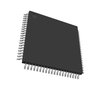
Part Details for ADMC300BST by Analog Devices Inc
Results Overview of ADMC300BST by Analog Devices Inc
- Distributor Offerings: (1 listing)
- Number of FFF Equivalents: (0 replacements)
- Tariff Estimator: (Available) NEW
- Number of Functional Equivalents: (0 options)
- CAD Models: (Request Part)
- Part Data Attributes: (Available)
- Reference Designs: (Not Available)
Tip: Data for a part may vary between manufacturers. You can filter for manufacturers on the top of the page next to the part image and part number.
Applications
Education and Research
Aerospace and Defense
Agriculture Technology
Automotive
Robotics and Drones
ADMC300BST Information
ADMC300BST by Analog Devices Inc is a Digital Signal Processor.
Digital Signal Processors are under the broader part category of Microcontrollers and Processors.
Microcontrollers (MCUs) are small, low-power integrated circuits used to control embedded systems. Microcontrollers are primarily used to automate and control devices. Read more about Microcontrollers and Processors on our Microcontrollers and Processors part category page.
Price & Stock for ADMC300BST
| Part # | Distributor | Description | Stock | Price | Buy | |
|---|---|---|---|---|---|---|
|
|
Vyrian | Peripheral ICs | 7167 |
|
RFQ |
US Tariff Estimator: ADMC300BST by Analog Devices Inc
Calculations from this tool are estimations only for imports into the United States. Please refer to the distributor or manufacturer and reference official US government sources and authorities to verify any final purchase costs.
Part Details for ADMC300BST
ADMC300BST Part Data Attributes
|
|
ADMC300BST
Analog Devices Inc
Buy Now
Datasheet
|
Compare Parts:
ADMC300BST
Analog Devices Inc
16-Bit Size, 0-Ext Bit, 12.5MHz, CMOS, PQFP80
|
| Rohs Code | No | |
| Part Life Cycle Code | Obsolete | |
| Part Package Code | QFP | |
| Package Description | Lqfp, | |
| Pin Count | 80 | |
| Reach Compliance Code | Unknown | |
| HTS Code | 8542.31.00.01 | |
| Address Bus Width | ||
| Barrel Shifter | Yes | |
| Bit Size | 16 | |
| Boundary Scan | No | |
| Clock Frequency-Max | 12.5 Mhz | |
| External Data Bus Width | ||
| Format | Fixed Point | |
| Internal Bus Architecture | Multiple | |
| JESD-30 Code | S-PQFP-G80 | |
| JESD-609 Code | e0 | |
| Length | 14 Mm | |
| Low Power Mode | Yes | |
| Number of Terminals | 80 | |
| Operating Temperature-Max | 85 °C | |
| Operating Temperature-Min | -40 °C | |
| Package Body Material | Plastic/Epoxy | |
| Package Code | LQFP | |
| Package Shape | Square | |
| Package Style | Flatpack, Low Profile | |
| Qualification Status | Not Qualified | |
| Seated Height-Max | 1.6 Mm | |
| Supply Voltage-Max | 5.5 V | |
| Supply Voltage-Min | 4.5 V | |
| Supply Voltage-Nom | 5 V | |
| Surface Mount | Yes | |
| Technology | Cmos | |
| Temperature Grade | Industrial | |
| Terminal Finish | Tin Lead | |
| Terminal Form | Gull Wing | |
| Terminal Pitch | 0.65 Mm | |
| Terminal Position | Quad | |
| Width | 14 Mm | |
| uPs/uCs/Peripheral ICs Type | Digital Signal Processor, Controller |
ADMC300BST Frequently Asked Questions (FAQ)
-
A 4-layer PCB with a solid ground plane and a separate analog ground plane is recommended. Keep the analog and digital grounds separate and connect them at a single point. Use a star topology for the power supply and keep the power traces away from the analog signals.
-
The ADMC300BST has an internal calibration circuit that can be enabled by setting the CAL pin high. The device will then perform a self-calibration sequence. Additionally, the user can perform an external calibration by applying a known input signal and adjusting the offset and gain registers accordingly.
-
The maximum sampling rate of the ADMC300BST is 100 kSPS. The power consumption increases with the sampling rate, but the device has a power-down mode that can be used to reduce power consumption when not in use. The power consumption at maximum sampling rate is approximately 35 mW.
-
The ADMC300BST has a serial interface that can be connected to a microcontroller. The device supports SPI and I2C communication protocols. The user can select the protocol by setting the MODE pin accordingly.
-
The internal voltage reference of the ADMC300BST has an accuracy of ±1.5%. The reference voltage can be adjusted by using an external resistor divider network to scale the reference voltage.