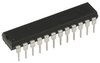
Part Details for AM2971ADC by AMD
Results Overview of AM2971ADC by AMD
- Distributor Offerings: (1 listing)
- Number of FFF Equivalents: (0 replacements)
- Tariff Estimator: (Available) NEW
- Number of Functional Equivalents: (0 options)
- CAD Models: (Request Part)
- Part Data Attributes: (Available)
- Reference Designs: (Not Available)
Tip: Data for a part may vary between manufacturers. You can filter for manufacturers on the top of the page next to the part image and part number.
AM2971ADC Information
AM2971ADC by AMD is an Other uP/uC/Peripheral IC.
Other uPs/uCs/Peripheral ICs are under the broader part category of Microcontrollers and Processors.
Microcontrollers (MCUs) are small, low-power integrated circuits used to control embedded systems. Microcontrollers are primarily used to automate and control devices. Read more about Microcontrollers and Processors on our Microcontrollers and Processors part category page.
Price & Stock for AM2971ADC
| Part # | Distributor | Description | Stock | Price | Buy | |
|---|---|---|---|---|---|---|
|
|
Quest Components | IC,USER PROGRAMMABLE SPECIAL FUNCTION ASIC,DIP,24PIN | 40 |
|
Buy Now |
US Tariff Estimator: AM2971ADC by AMD
Calculations from this tool are estimations only for imports into the United States. Please refer to the distributor or manufacturer and reference official US government sources and authorities to verify any final purchase costs.
Part Details for AM2971ADC
AM2971ADC Part Data Attributes
|
|
AM2971ADC
AMD
Buy Now
Datasheet
|
Compare Parts:
AM2971ADC
AMD
AM2971ADC
|
| Part Life Cycle Code | Obsolete | |
| Part Package Code | DIP | |
| Package Description | Ceramic, Dip-24 | |
| Pin Count | 24 | |
| HTS Code | 8542.31.00.30 | |
| JESD-30 Code | R-GDIP-T24 | |
| JESD-609 Code | e0 | |
| Length | 32.0675 Mm | |
| Number of Terminals | 24 | |
| Operating Temperature-Max | 70 °C | |
| Operating Temperature-Min | ||
| Package Body Material | Ceramic, Glass-Sealed | |
| Package Code | DIP | |
| Package Shape | Rectangular | |
| Package Style | In-Line | |
| Qualification Status | Not Qualified | |
| Seated Height-Max | 5.588 Mm | |
| Supply Current-Max | 425 Ma | |
| Supply Voltage-Max | 5.5 V | |
| Supply Voltage-Min | 4.5 V | |
| Supply Voltage-Nom | 5 V | |
| Surface Mount | No | |
| Technology | Cmos | |
| Temperature Grade | Commercial | |
| Terminal Finish | Tin/Lead (Sn/Pb) | |
| Terminal Form | Through-Hole | |
| Terminal Pitch | 2.54 Mm | |
| Terminal Position | Dual | |
| Width | 15.24 Mm | |
| uPs/uCs/Peripheral ICs Type | Microprocessor Circuit |
AM2971ADC Frequently Asked Questions (FAQ)
-
The recommended power-up sequence is to apply VCC first, followed by VDD, and then the clock signal. This ensures proper initialization and prevents latch-up.
-
To optimize the analog input impedance, use a buffer amplifier with a high input impedance (>10kΩ) and a low output impedance (<100Ω) to drive the ADC inputs. This ensures minimal signal attenuation and distortion.
-
The AM2971ADC supports clock frequencies up to 20 MHz. However, the maximum clock frequency may vary depending on the specific application and system requirements.
-
To handle metastability issues, use a synchronizer circuit or a FIFO buffer to resynchronize the data and clock signals when crossing clock domains. This ensures data integrity and prevents errors.
-
Keep analog and digital signals separate, using separate power planes and ground planes. Route analog signals away from digital signals and noise sources, and use shielding or guard rings to minimize noise coupling.