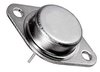
| Part Number | Manufacturer | Composite Price | Description | Compare |
|---|---|---|---|---|
| BUT92.MOD | TT Electronics Resistors | Check for Price | Power Bipolar Transistor, 50A I(C), 250V V(BR)CEO, 1-Element, NPN, Silicon, TO-204AE, Metal, 2 Pin | BUT92 vs BUT92.MOD |
| BUT92.MODR1 | TT Electronics Power and Hybrid / Semelab Limited | Check for Price | Power Bipolar Transistor, 50A I(C), 250V V(BR)CEO, 1-Element, NPN, Silicon, TO-204AE, Metal, 2 Pin | BUT92 vs BUT92.MODR1 |
| BUT92R1 | TT Electronics Power and Hybrid / Semelab Limited | Check for Price | Power Bipolar Transistor, 50A I(C), 250V V(BR)CEO, 1-Element, NPN, Silicon, TO-204AE, Metal, 2 Pin | BUT92 vs BUT92R1 |
| BUT92 | TT Electronics Power and Hybrid / Semelab Limited | Check for Price | Power Bipolar Transistor, 50A I(C), 250V V(BR)CEO, 1-Element, NPN, Silicon, TO-204AE, Metal, 2 Pin | BUT92 vs BUT92 |
| BUT92R1 | TT Electronics Resistors | Check for Price | Power Bipolar Transistor, 50A I(C), 250V V(BR)CEO, 1-Element, NPN, Silicon, TO-204AE, Metal, 2 Pin | BUT92 vs BUT92R1 |
Part Details for BUT92 by STMicroelectronics
Results Overview of BUT92 by STMicroelectronics
- Distributor Offerings: (1 listing)
- Number of FFF Equivalents: (5 replacements)
- Tariff Estimator: (Available) NEW
- Number of Functional Equivalents: (10 options)
- CAD Models: (Request Part)
- Part Data Attributes: (Available)
- Reference Designs: (Not Available)
Tip: Data for a part may vary between manufacturers. You can filter for manufacturers on the top of the page next to the part image and part number.
BUT92 Information
BUT92 by STMicroelectronics is a Power Bipolar Transistor.
Power Bipolar Transistors are under the broader part category of Transistors.
A transistor is a small semiconductor device used to amplify, control, or create electrical signals. When selecting a transistor, factors such as voltage, current rating, gain, and power dissipation must be considered, with common types. Read more about Transistors on our Transistors part category page.
Price & Stock for BUT92
| Part # | Distributor | Description | Stock | Price | Buy | |
|---|---|---|---|---|---|---|
|
DISTI #
BUT92-ND
|
DigiKey | TRANS NPN 250V 50A TO-3 Min Qty: 100 Container: Tube |
0 Tube |
|
$8.7012 | Buy Now |
US Tariff Estimator: BUT92 by STMicroelectronics
Calculations from this tool are estimations only for imports into the United States. Please refer to the distributor or manufacturer and reference official US government sources and authorities to verify any final purchase costs.
BUT92 Part Data Attributes
|
|
BUT92
STMicroelectronics
Buy Now
Datasheet
|
Compare Parts:
BUT92
STMicroelectronics
Power Bipolar Transistor, 50A I(C), 250V V(BR)CEO, 1-Element, NPN, Silicon, TO-3, Metal, 2 Pin
|
| Pbfree Code | Yes | |
| Rohs Code | Yes | |
| Part Life Cycle Code | Obsolete | |
| Part Package Code | TO-204AA | |
| Package Description | To-3, 2 Pin | |
| Pin Count | 2 | |
| ECCN Code | EAR99 | |
| HTS Code | 8541.29.00.95 | |
| Case Connection | Collector | |
| Collector Current-Max (IC) | 50 A | |
| Collector-Emitter Voltage-Max | 250 V | |
| Configuration | Single | |
| DC Current Gain-Min (hFE) | 20 | |
| JEDEC-95 Code | TO-3 | |
| JESD-30 Code | O-MBFM-P2 | |
| JESD-609 Code | e3 | |
| Number of Elements | 1 | |
| Number of Terminals | 2 | |
| Operating Temperature-Max | 200 °C | |
| Package Body Material | Metal | |
| Package Shape | Round | |
| Package Style | Flange Mount | |
| Polarity/Channel Type | Npn | |
| Power Dissipation Ambient-Max | 250 W | |
| Power Dissipation-Max (Abs) | 250 W | |
| Qualification Status | Not Qualified | |
| Surface Mount | No | |
| Terminal Finish | Matte Tin (Sn) | |
| Terminal Form | Pin/Peg | |
| Terminal Position | Bottom | |
| Transistor Application | Switching | |
| Transistor Element Material | Silicon | |
| Transition Frequency-Nom (fT) | 8 Mhz | |
| Turn-off Time-Max (toff) | 3400 Ns | |
| VCEsat-Max | 1.2 V |
Alternate Parts for BUT92
This table gives cross-reference parts and alternative options found for BUT92. The Form Fit Function (FFF) tab will give you the options that are more likely to serve as direct pin-to-pin alternates or drop-in parts. The Functional Equivalents tab will give you options that are likely to match the same function of BUT92, but it may not fit your design. Always verify details of parts you are evaluating, as these parts are offered as suggestions for what you are looking for and are not guaranteed.
BUT92 Frequently Asked Questions (FAQ)
-
The maximum safe operating area (SOA) for the BUT92 is not explicitly stated in the datasheet, but it can be estimated based on the device's thermal resistance, maximum junction temperature, and voltage and current ratings. As a general rule, it's recommended to operate the device within the specified voltage and current limits to ensure safe operation.
-
To ensure the BUT92 is properly biased for linear operation, you should ensure that the base-emitter voltage (VBE) is within the recommended range (typically around 0.6-0.7V) and that the collector-emitter voltage (VCE) is sufficient to maintain the device in the active region. You should also ensure that the base current is sufficient to maintain the desired collector current.
-
The recommended PCB layout for the BUT92 involves keeping the device away from heat sources, using a thermal pad or heat sink to dissipate heat, and ensuring good copper pour and thermal vias to reduce thermal resistance. You should also follow good PCB design practices, such as keeping the device away from high-current paths and using adequate decoupling capacitors.
-
To protect the BUT92 from electrostatic discharge (ESD), you should handle the device with anti-static precautions, such as using an anti-static wrist strap or mat, and ensure that the device is properly packaged and stored in an ESD-safe environment. You should also consider adding ESD protection devices, such as TVS diodes or ESD protection arrays, to your circuit design.
-
The reliability and failure modes of the BUT92 are not explicitly stated in the datasheet, but they can be estimated based on the device's construction and materials. Common failure modes for bipolar transistors like the BUT92 include thermal runaway, electrical overstress, and mechanical stress. You should ensure that the device is operated within its specified ratings and that adequate design margins are included to account for potential failures.