
Part Details for CC400-RTR2 by Texas Instruments
Results Overview of CC400-RTR2 by Texas Instruments
- Distributor Offerings: (1 listing)
- Number of FFF Equivalents: (0 replacements)
- Tariff Estimator: (Available) NEW
- Number of Functional Equivalents: (0 options)
- CAD Models: (Available)
- Part Data Attributes: (Available)
- Reference Designs: (Not Available)
Tip: Data for a part may vary between manufacturers. You can filter for manufacturers on the top of the page next to the part image and part number.
CC400-RTR2 Information
CC400-RTR2 by Texas Instruments is an Other Telecom IC.
Other Telecom ICs are under the broader part category of Telecommunication Circuits.
A telecommunications circuit transmits and receives information between points. Key components include transmitters, receivers, amplifiers, and multiplexers. Read more about Telecommunication Circuits on our Telecommunication Circuits part category page.
Price & Stock for CC400-RTR2
| Part # | Distributor | Description | Stock | Price | Buy | |
|---|---|---|---|---|---|---|
|
|
Vyrian | Telecom Circuit, 1-Func, PDSO28 | 6388 |
|
RFQ |
US Tariff Estimator: CC400-RTR2 by Texas Instruments
Calculations from this tool are estimations only for imports into the United States. Please refer to the distributor or manufacturer and reference official US government sources and authorities to verify any final purchase costs.
CC400-RTR2 CAD Models
-
Part Symbol
-
Footprint
-
3D Model
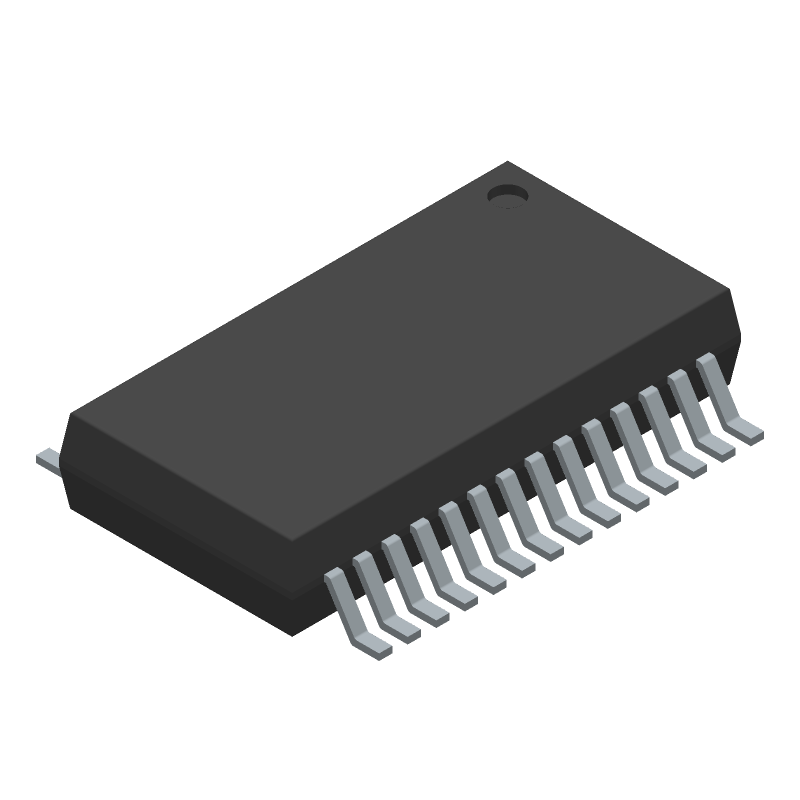
Available Download Formats
By downloading CAD models, you agree to our Terms & Conditions and Privacy Policy
CC400-RTR2 Part Data Attributes
|
|
CC400-RTR2
Texas Instruments
Buy Now
Datasheet
|
Compare Parts:
CC400-RTR2
Texas Instruments
Telecom Circuit, 1-Func, PDSO28
|
| Rohs Code | Yes | |
| Part Life Cycle Code | Obsolete | |
| Package Description | Ssop-28 | |
| HTS Code | 8542.39.00.01 | |
| Data Rate | 9 Mbps | |
| JESD-30 Code | R-PDSO-G28 | |
| Length | 10.2 Mm | |
| Number of Functions | 1 | |
| Number of Terminals | 28 | |
| Operating Temperature-Max | 85 °C | |
| Operating Temperature-Min | -30 °C | |
| Package Body Material | Plastic/Epoxy | |
| Package Code | SSOP | |
| Package Equivalence Code | SSOP28,.3 | |
| Package Shape | Rectangular | |
| Package Style | Small Outline, Shrink Pitch | |
| Qualification Status | Not Qualified | |
| Seated Height-Max | 2 Mm | |
| Supply Voltage-Nom | 3 V | |
| Surface Mount | Yes | |
| Telecom IC Type | Telecom Circuit | |
| Temperature Grade | Other | |
| Terminal Form | Gull Wing | |
| Terminal Pitch | 0.65 Mm | |
| Terminal Position | Dual | |
| Width | 5.3 Mm |
CC400-RTR2 Frequently Asked Questions (FAQ)
-
TI recommends a 4-layer PCB with a solid ground plane, and a separate power plane for the CC400-RTR2. Keep the RF traces short and away from digital signals. Use a 50-ohm microstrip or coplanar waveguide for the antenna connection.
-
Configure the device for the highest data rate (250 kbps) and adjust the transmission power (up to 20 dBm) based on the specific application requirements. Use the SmartRF Studio software to optimize the settings for your specific use case.
-
TI recommends a quarter-wavelength monopole antenna or a dipole antenna with a 50-ohm impedance. The antenna should be designed to operate at the desired frequency band (e.g., 868 MHz or 915 MHz) and should be matched to the CC400-RTR2's output impedance.
-
Use the device's built-in frequency hopping capabilities by configuring the frequency hopping mode and setting the hop sequence. For adaptive frequency hopping, use the device's RSSI (Received Signal Strength Indication) and LQI (Link Quality Indication) values to dynamically adjust the hop sequence and frequency.
-
Use the AES-128 encryption algorithm and implement a secure key exchange mechanism, such as Elliptic Curve Cryptography (ECC) or Advanced Encryption Standard (AES) with a secure key exchange protocol like Diffie-Hellman or public-key cryptography.