-
Part Symbol
-
Footprint
-
3D Model
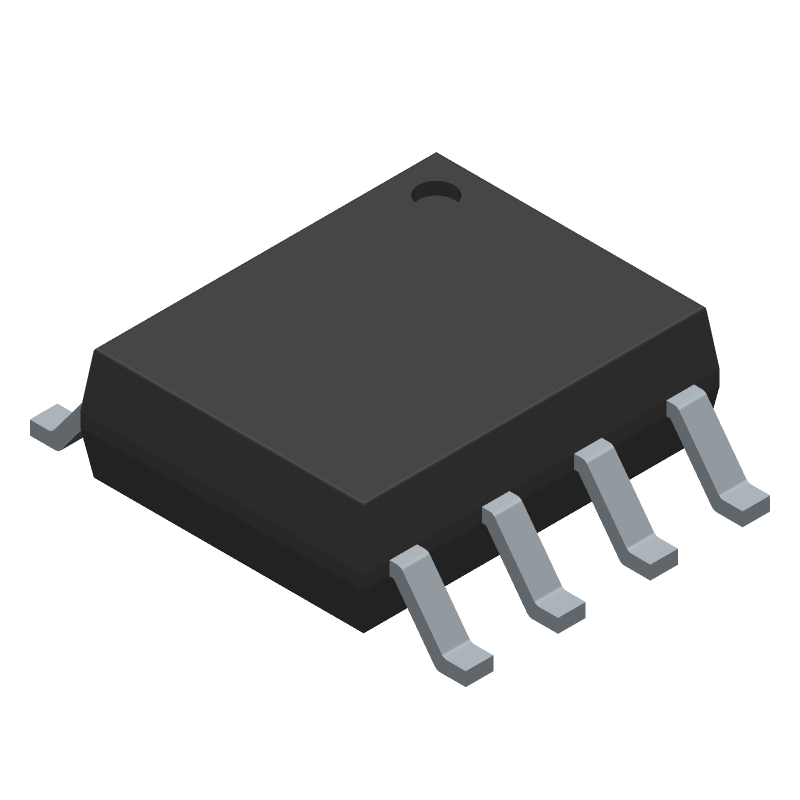
Available Download Formats
By downloading CAD models, you agree to our Terms & Conditions and Privacy Policy
Analog Voltage Output Sensor, 2.95V Min, 3.01V Max, 1Cel, Bipolar, Rectangular, 8 Pin, Surface Mount
Tip: Data for a part may vary between manufacturers. You can filter for manufacturers on the top of the page next to the part image and part number.
LM335AD by STMicroelectronics is a Temperature Sensor.
Temperature Sensors are under the broader part category of Sensors/Transducers.
Sensors and transducers detect and measure physical quantities like temperature, pressure, and force, converting them into electrical signals for various applications. Read more about Sensors/Transducers on our Sensors/Transducers part category page.
| Part # | Distributor | Description | Stock | Price | Buy | |
|---|---|---|---|---|---|---|
|
DISTI #
LM335AD-ND
|
DigiKey | SENSOR ANALOG -40C-100C 8SOIC Container: Tube |
0 Tube |
|
Buy Now | |
|
DISTI #
LM335AD
|
Avnet Americas | - Rail/Tube (Alt: LM335AD) COO: Malaysia RoHS: Compliant Min Qty: 2000 Package Multiple: 2000 Container: Tube | 0 |
|
RFQ | |
|
|
Vyrian | Analog Voltage Output Sensor, 2.95V Min, 3.01V Max, 1Cel, Bipolar, Rectangular, 8 Pin, Surface Mount | 5824 |
|
RFQ |
By downloading CAD models, you agree to our Terms & Conditions and Privacy Policy
|
|
LM335AD
STMicroelectronics
Buy Now
Datasheet
|
Compare Parts:
LM335AD
STMicroelectronics
Analog Voltage Output Sensor, 2.95V Min, 3.01V Max, 1Cel, Bipolar, Rectangular, 8 Pin, Surface Mount
|
| Rohs Code | Yes | |
| Part Life Cycle Code | Obsolete | |
| Package Description | Plastic, So-8 | |
| Accuracy-Max (Cel) | 1 Cel | |
| Body Breadth | 3.9 Mm | |
| Body Height | 1.5 Mm | |
| Body Length or Diameter | 4.9 Mm | |
| Housing | Plastic | |
| JESD-609 Code | e3 | |
| Mounting Feature | Surface Mount | |
| Number of Terminals | 8 | |
| Operating Current-Max | 5 Ma | |
| Operating Temperature-Max | 100 °C | |
| Operating Temperature-Min | -40 °C | |
| Output Voltage-Max | 3.01 V | |
| Output Voltage-Min | 2.95 V | |
| Package Body Material | Plastic/Epoxy | |
| Package Equivalence Code | SOP8,.3 | |
| Package Shape/Style | Rectangular | |
| Sensors/Transducers Type | Temperature Sensor,Analog,Voltage Output | |
| Surface Mount | Yes | |
| Technology | Bipolar | |
| Terminal Finish | Matte Tin (Sn) | |
| Termination Type | Solder |
This table gives cross-reference parts and alternative options found for LM335AD. The Form Fit Function (FFF) tab will give you the options that are more likely to serve as direct pin-to-pin alternates or drop-in parts. The Functional Equivalents tab will give you options that are likely to match the same function of LM335AD, but it may not fit your design. Always verify details of parts you are evaluating, as these parts are offered as suggestions for what you are looking for and are not guaranteed.
| Part Number | Manufacturer | Composite Price | Description | Compare |
|---|---|---|---|---|
| LM335M | National Semiconductor Corporation | Check for Price | Analog Voltage Output Sensor, 2.95V Min, 3.04V Max, 1Cel, Bipolar, Rectangular, 8 Pin, Surface Mount | LM335AD vs LM335M |
The recommended operating temperature range for the LM335AD is -40°C to 100°C, but it can operate up to 150°C with reduced accuracy.
To ensure accurate temperature measurements, it's essential to provide a stable voltage supply, minimize noise and interference, and use a low-impedance output connection. Additionally, calibrate the device at multiple temperatures to account for any non-linearity.
Yes, the LM335AD is designed to operate in high-vibration environments. However, it's crucial to ensure the device is properly mounted and secured to prevent mechanical stress, which can affect its accuracy and reliability.
To protect the LM335AD from EMI, use a shielded cable for the output connection, keep the device away from high-frequency sources, and consider adding a low-pass filter or ferrite bead to the output line.
The typical response time of the LM335AD is around 10-20 seconds, but this can vary depending on the thermal mass of the device and the surrounding environment.