| Part Number | Manufacturer | Composite Price | Description | Compare |
|---|---|---|---|---|
| DS481TMX/NOPB | Texas Instruments | Check for Price | Line Transceiver, 1 Func, 1 Driver, 1 Rcvr, CMOS, PDSO8 | ST485CD vs DS481TMX/NOPB |
| DS481TMX | National Semiconductor Corporation | Check for Price | Line Transceiver, 1 Func, 1 Driver, 1 Rcvr, CMOS, PDSO8 | ST485CD vs DS481TMX |
| LMS1487ECM | National Semiconductor Corporation | Check for Price | Line Transceiver, 1 Func, 1 Driver, 1 Rcvr, PDSO8 | ST485CD vs LMS1487ECM |
| DS481TM | National Semiconductor Corporation | Check for Price | Line Transceiver, 1 Func, 1 Driver, 1 Rcvr, CMOS, PDSO8 | ST485CD vs DS481TM |
| LMS1487EIM/NOPB | Texas Instruments | Check for Price | Line Transceiver, 1 Func, 1 Driver, 1 Rcvr, PDSO8 | ST485CD vs LMS1487EIM/NOPB |
| LMS1487EIMX | National Semiconductor Corporation | Check for Price | Line Transceiver, 1 Func, 1 Driver, 1 Rcvr, PDSO8 | ST485CD vs LMS1487EIMX |
| DS481TM/NOPB | Texas Instruments | Check for Price | Line Transceiver, 1 Func, 1 Driver, 1 Rcvr, CMOS, PDSO8 | ST485CD vs DS481TM/NOPB |
| LMS1487ECM | Texas Instruments | Check for Price | Line Transceiver, 1 Func, 1 Driver, 1 Rcvr, PDSO8 | ST485CD vs LMS1487ECM |
| LMS1487EIMX/NOPB | Texas Instruments | Check for Price | Line Transceiver, 1 Func, 1 Driver, 1 Rcvr, PDSO8 | ST485CD vs LMS1487EIMX/NOPB |
| DS481TM | Rochester Electronics LLC | Check for Price | LINE TRANSCEIVER, PDSO8, PLASTIC, SOP-8 | ST485CD vs DS481TM |
Part Details for ST485CD by STMicroelectronics
Results Overview of ST485CD by STMicroelectronics
- Distributor Offerings: (2 listings)
- Number of FFF Equivalents: (10 replacements)
- Tariff Estimator: (Available) NEW
- Number of Functional Equivalents: (10 options)
- CAD Models: (Available)
- Part Data Attributes: (Available)
- Reference Designs: (Not Available)
Tip: Data for a part may vary between manufacturers. You can filter for manufacturers on the top of the page next to the part image and part number.
Applications
Space Technology
Industrial Automation
Aerospace and Defense
Telecommunications
Renewable Energy
Communication and Networking
Automotive
Robotics and Drones
ST485CD Information
ST485CD by STMicroelectronics is a Line Driver or Receiver.
Line Driver or Receivers are under the broader part category of Drivers And Interfaces.
A driver controls the current or voltage delivered to components like LCDs or motors, while an interface component connects systems for data transfer and control. Read more about Drivers And Interfaces on our Drivers And Interfaces part category page.
Price & Stock for ST485CD
| Part # | Distributor | Description | Stock | Price | Buy | |
|---|---|---|---|---|---|---|
|
|
Bristol Electronics | Single Transmitter/Receiver RS-422/RS-485 8-Pin SO N Tube | 24 |
|
RFQ | |
|
|
Vyrian | Line Transceiver, 1 Func, 1 Driver, 1 Rcvr, PDSO8 | 407 |
|
RFQ |
US Tariff Estimator: ST485CD by STMicroelectronics
Calculations from this tool are estimations only for imports into the United States. Please refer to the distributor or manufacturer and reference official US government sources and authorities to verify any final purchase costs.
ST485CD CAD Models
-
Part Symbol
-
Footprint
-
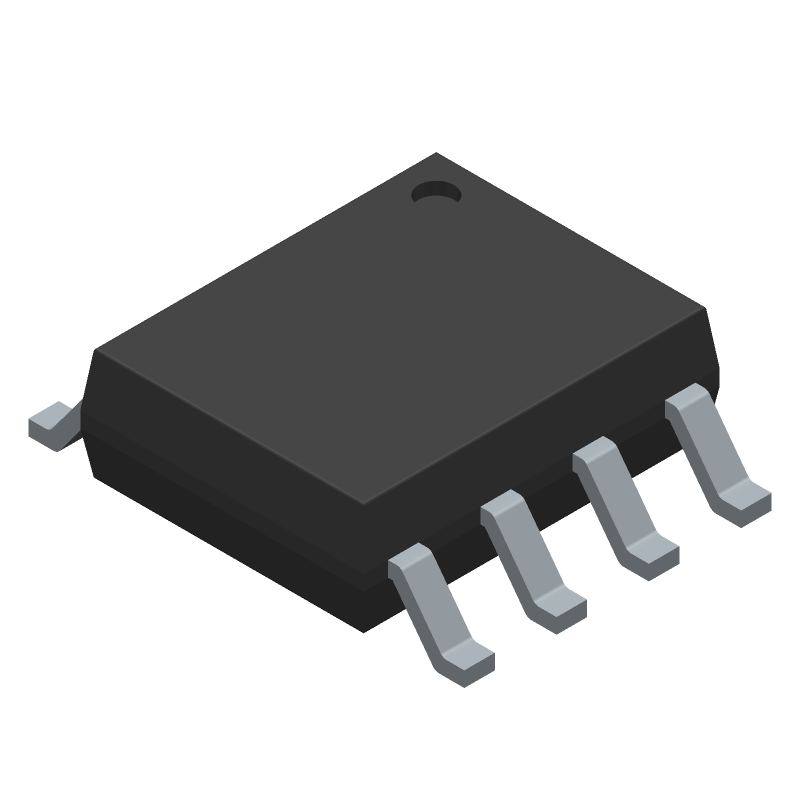
3D Model
Available Download Formats
By downloading CAD models, you agree to our Terms & Conditions and Privacy Policy
ST485CD Part Data Attributes
|
|
ST485CD
STMicroelectronics
Buy Now
Datasheet
|
Compare Parts:
ST485CD
STMicroelectronics
Line Transceiver, 1 Func, 1 Driver, 1 Rcvr, PDSO8
|
| Rohs Code | Yes | |
| Part Life Cycle Code | Obsolete | |
| Part Package Code | SOIC | |
| Package Description | Sop-8 | |
| Pin Count | 8 | |
| ECCN Code | EAR99 | |
| HTS Code | 8542.39.00.60 | |
| Differential Output | Yes | |
| Driver Number of Bits | 1 | |
| Input Characteristics | Differential Schmitt Trigger | |
| Interface IC Type | Line Transceiver | |
| Interface Standard | Eia-422; Eia-485 | |
| JESD-30 Code | R-PDSO-G8 | |
| JESD-609 Code | e4 | |
| Length | 4.9 Mm | |
| Moisture Sensitivity Level | 1 | |
| Number of Functions | 1 | |
| Number of Terminals | 8 | |
| Operating Temperature-Max | 70 °C | |
| Operating Temperature-Min | ||
| Out Swing-Min | 1.5 V | |
| Output Low Current-Max | 0.004 A | |
| Package Body Material | Plastic/Epoxy | |
| Package Code | SOP | |
| Package Equivalence Code | SOP8,.25 | |
| Package Shape | Rectangular | |
| Package Style | Small Outline | |
| Qualification Status | Not Qualified | |
| Receive Delay-Max | 230 Ns | |
| Receiver Number of Bits | 1 | |
| Seated Height-Max | 1.75 Mm | |
| Supply Current-Max | 0.9 Ma | |
| Supply Voltage-Max | 5.25 V | |
| Supply Voltage-Min | 4.75 V | |
| Supply Voltage-Nom | 5 V | |
| Surface Mount | Yes | |
| Temperature Grade | Commercial | |
| Terminal Finish | Nickel Palladium Gold | |
| Terminal Form | Gull Wing | |
| Terminal Pitch | 1.27 Mm | |
| Terminal Position | Dual | |
| Transmit Delay-Max | 70 Ns | |
| Width | 3.9 Mm |
Alternate Parts for ST485CD
This table gives cross-reference parts and alternative options found for ST485CD. The Form Fit Function (FFF) tab will give you the options that are more likely to serve as direct pin-to-pin alternates or drop-in parts. The Functional Equivalents tab will give you options that are likely to match the same function of ST485CD, but it may not fit your design. Always verify details of parts you are evaluating, as these parts are offered as suggestions for what you are looking for and are not guaranteed.
ST485CD Frequently Asked Questions (FAQ)
-
The maximum cable length supported by the ST485CD depends on the baud rate and the type of cable used. As a general rule, the maximum cable length is 1200 meters at 9600 bps, 600 meters at 19200 bps, and 300 meters at 38400 bps.
-
To ensure reliable communication over long distances, use a twisted pair cable, keep the cable away from noise sources, use a common mode choke or ferrite bead to reduce electromagnetic interference, and consider using a repeater or an isolator to boost the signal.
-
The main difference between the ST485CD and the ST485CN is the operating temperature range. The ST485CD has an operating temperature range of -40°C to 125°C, while the ST485CN has an operating temperature range of -40°C to 85°C.
-
Yes, the ST485CD can be used in a multi-point configuration. However, it is recommended to use a repeater or an isolator to boost the signal and ensure reliable communication.
-
To troubleshoot communication issues with the ST485CD, check the cable connections, ensure that the transmitter and receiver are properly configured, use a logic analyzer or oscilloscope to check the signal, and verify that the baud rate and data format are correct.