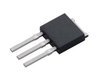
Part Details for STD1805-1 by STMicroelectronics
Results Overview of STD1805-1 by STMicroelectronics
- Distributor Offerings: (1 listing)
- Number of FFF Equivalents: (0 replacements)
- Tariff Estimator: (Not Available)
- Number of Functional Equivalents: (0 options)
- CAD Models: (Request Part)
- Part Data Attributes: (Available)
- Reference Designs: (Not Available)
Tip: Data for a part may vary between manufacturers. You can filter for manufacturers on the top of the page next to the part image and part number.
STD1805-1 Information
STD1805-1 by STMicroelectronics is a Power Bipolar Transistor.
Power Bipolar Transistors are under the broader part category of Transistors.
A transistor is a small semiconductor device used to amplify, control, or create electrical signals. When selecting a transistor, factors such as voltage, current rating, gain, and power dissipation must be considered, with common types. Read more about Transistors on our Transistors part category page.
Price & Stock for STD1805-1
| Part # | Distributor | Description | Stock | Price | Buy | |
|---|---|---|---|---|---|---|
|
|
Vyrian | Discontinued | 8674 |
|
RFQ |
Part Details for STD1805-1
STD1805-1 CAD Models
STD1805-1 Part Data Attributes
|
|
STD1805-1
STMicroelectronics
Buy Now
Datasheet
|
Compare Parts:
STD1805-1
STMicroelectronics
Power Bipolar Transistor, 5A I(C), 60V V(BR)CEO, 1-Element, NPN, Silicon, TO-251AA, Plastic/Epoxy, 3 Pin
|
| Pbfree Code | Yes | |
| Rohs Code | Yes | |
| Part Life Cycle Code | Obsolete | |
| Part Package Code | TO-251AA | |
| Package Description | To-251, Ipak-3 | |
| Pin Count | 3 | |
| Reach Compliance Code | Not Compliant | |
| ECCN Code | EAR99 | |
| Collector Current-Max (IC) | 5 A | |
| Collector-Emitter Voltage-Max | 60 V | |
| Configuration | Single | |
| DC Current Gain-Min (hFE) | 20 | |
| JEDEC-95 Code | TO-251AA | |
| JESD-30 Code | R-PSIP-T3 | |
| JESD-609 Code | e3 | |
| Moisture Sensitivity Level | 1 | |
| Number of Elements | 1 | |
| Number of Terminals | 3 | |
| Operating Temperature-Max | 150 °C | |
| Package Body Material | Plastic/Epoxy | |
| Package Shape | Rectangular | |
| Package Style | In-Line | |
| Peak Reflow Temperature (Cel) | 260 | |
| Polarity/Channel Type | Npn | |
| Power Dissipation-Max (Abs) | 15 W | |
| Qualification Status | Not Qualified | |
| Surface Mount | No | |
| Terminal Finish | Matte Tin (Sn) - Annealed | |
| Terminal Form | Through-Hole | |
| Terminal Position | Single | |
| Time@Peak Reflow Temperature-Max (s) | 30 | |
| Transistor Application | Switching | |
| Transistor Element Material | Silicon | |
| Transition Frequency-Nom (fT) | 150 Mhz |
STD1805-1 Frequently Asked Questions (FAQ)
-
STMicroelectronics provides a recommended PCB layout in the application note AN5275, which includes guidelines for component placement, routing, and thermal management to ensure optimal performance and minimize electromagnetic interference (EMI).
-
To handle the high current consumption during startup, it's recommended to use a soft-start circuit or a current limiter to prevent inrush currents from damaging the device or the power supply. Additionally, ensuring a stable power supply voltage and using a sufficient decoupling capacitor can help reduce startup currents.
-
While the datasheet specifies an operating temperature range of -40°C to 125°C, it's essential to note that the device's performance and reliability may degrade at extreme temperatures. It's recommended to operate the device within a temperature range of -20°C to 85°C for optimal performance and reliability.
-
To ensure EMC compliance, follow the guidelines in the application note AN5275, which provides recommendations for PCB layout, component selection, and shielding to minimize electromagnetic radiation and susceptibility. Additionally, consider using EMI filters, shielding, and grounding techniques to reduce emissions and improve immunity.
-
STMicroelectronics provides a test and measurement guide in the application note AN5275, which outlines procedures for characterizing the device's performance, including voltage and current measurements, frequency response analysis, and thermal testing. It's essential to follow these guidelines to ensure accurate and reliable test results.