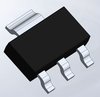
Part Details for STN1802 by STMicroelectronics
Results Overview of STN1802 by STMicroelectronics
- Distributor Offerings: (2 listings)
- Number of FFF Equivalents: (0 replacements)
- Tariff Estimator: (Not Available)
- Number of Functional Equivalents: (0 options)
- CAD Models: (Request Part)
- Part Data Attributes: (Available)
- Reference Designs: (Not Available)
Tip: Data for a part may vary between manufacturers. You can filter for manufacturers on the top of the page next to the part image and part number.
STN1802 Information
STN1802 by STMicroelectronics is a Power Bipolar Transistor.
Power Bipolar Transistors are under the broader part category of Transistors.
A transistor is a small semiconductor device used to amplify, control, or create electrical signals. When selecting a transistor, factors such as voltage, current rating, gain, and power dissipation must be considered, with common types. Read more about Transistors on our Transistors part category page.
Price & Stock for STN1802
| Part # | Distributor | Description | Stock | Price | Buy | |
|---|---|---|---|---|---|---|
|
DISTI #
STN1802-ND
|
DigiKey | TRANS NPN 60V 3A SOT-223 Min Qty: 2000 Container: Tape & Reel |
0 Tape & Reel |
|
$0.4625 / $0.5202 | Buy Now |
|
|
Vyrian | Power Bipolar Transistor, 3A I(C), 60V V(BR)CEO, 1-Element, NPN, Silicon, Plastic/Epoxy, 4 Pin | 10042 |
|
RFQ |
STN1802 Part Data Attributes
|
|
STN1802
STMicroelectronics
Buy Now
Datasheet
|
Compare Parts:
STN1802
STMicroelectronics
Power Bipolar Transistor, 3A I(C), 60V V(BR)CEO, 1-Element, NPN, Silicon, Plastic/Epoxy, 4 Pin
|
| Pbfree Code | Yes | |
| Rohs Code | Yes | |
| Part Life Cycle Code | Active Unconfirmed | |
| Part Package Code | SOT-223 | |
| Package Description | Sot-223, 4 Pin | |
| Pin Count | 4 | |
| ECCN Code | EAR99 | |
| Case Connection | Collector | |
| Collector Current-Max (IC) | 3 A | |
| Collector-Emitter Voltage-Max | 60 V | |
| Configuration | Single | |
| DC Current Gain-Min (hFE) | 100 | |
| JESD-30 Code | R-PDSO-G4 | |
| JESD-609 Code | e3 | |
| Number of Elements | 1 | |
| Number of Terminals | 4 | |
| Operating Temperature-Max | 150 °C | |
| Package Body Material | Plastic/Epoxy | |
| Package Shape | Rectangular | |
| Package Style | Small Outline | |
| Polarity/Channel Type | Npn | |
| Power Dissipation-Max (Abs) | 1.6 W | |
| Qualification Status | Not Qualified | |
| Surface Mount | Yes | |
| Terminal Finish | Matte Tin (Sn) | |
| Terminal Form | Gull Wing | |
| Terminal Position | Dual | |
| Transistor Application | Switching | |
| Transistor Element Material | Silicon | |
| Transition Frequency-Nom (fT) | 150 Mhz |
STN1802 Frequently Asked Questions (FAQ)
-
STMicroelectronics provides a recommended PCB layout in the application note AN5323, which includes guidelines for component placement, routing, and thermal management to ensure optimal performance and minimize electromagnetic interference (EMI).
-
The STN1802 requires a stable power supply with adequate decoupling capacitors to ensure proper operation. A minimum of 100nF ceramic capacitor should be placed close to the VCC pin, and additional bulk capacitors can be added to the power supply lines to filter out noise and ripple.
-
The STN1802 is rated for operation from -40°C to 125°C, but the maximum operating temperature range may vary depending on the specific application and environmental conditions. It's essential to consult the datasheet and application notes for specific guidance on thermal management and derating.
-
STMicroelectronics provides a troubleshooting guide in the application note AN5323, which includes a step-by-step approach to identifying and resolving common issues with the STN1802. Additionally, engineers can consult the datasheet, user manuals, and online forums for further guidance and support.
-
Yes, when using the STN1802 in a high-reliability or safety-critical application, engineers should consider implementing additional safety features, such as redundant circuits, error detection and correction, and fault tolerance. They should also consult the datasheet and application notes for specific guidance on reliability and safety considerations.