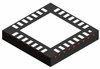
Part Details for TLC32046CFN by Texas Instruments
Results Overview of TLC32046CFN by Texas Instruments
- Distributor Offerings: (4 listings)
- Number of FFF Equivalents: (0 replacements)
- Tariff Estimator: (Available) NEW
- Number of Functional Equivalents: (0 options)
- CAD Models: (Request Part)
- Part Data Attributes: (Available)
- Reference Designs: (Not Available)
Tip: Data for a part may vary between manufacturers. You can filter for manufacturers on the top of the page next to the part image and part number.
TLC32046CFN Information
TLC32046CFN by Texas Instruments is an Other Signal Circuit.
Other Signal Circuits are under the broader part category of Signal Circuits.
A signal is an electronic means of transmitting information, either as an analog signal with continuous values or a digital signal with discrete values. Signals are used in various systems and networks. Read more about Signal Circuits on our Signal Circuits part category page.
Price & Stock for TLC32046CFN
| Part # | Distributor | Description | Stock | Price | Buy | |
|---|---|---|---|---|---|---|
|
|
Bristol Electronics | Voiceband Audio Codec 1ADC / 1DAC Ch 28-Pin PLCC Tube | 779 |
|
RFQ | |
|
|
Quest Components | 623 |
|
$100.1700 / $133.5600 | Buy Now | |
|
|
Quest Components | 2 |
|
$105.7350 / $111.3000 | Buy Now | |
|
|
Vyrian | Analog Circuit, 1 Func, CMOS, PQCC28 | 5948 |
|
RFQ |
US Tariff Estimator: TLC32046CFN by Texas Instruments
Calculations from this tool are estimations only for imports into the United States. Please refer to the distributor or manufacturer and reference official US government sources and authorities to verify any final purchase costs.
TLC32046CFN Part Data Attributes
|
|
TLC32046CFN
Texas Instruments
Buy Now
Datasheet
|
Compare Parts:
TLC32046CFN
Texas Instruments
Analog Circuit, 1 Func, CMOS, PQCC28
|
| Pbfree Code | No | |
| Part Life Cycle Code | Obsolete | |
| Part Package Code | QFN | |
| Package Description | Plastic, Cc-28 | |
| Pin Count | 28 | |
| HTS Code | 8542.39.00.01 | |
| Analog IC - Other Type | Analog Circuit | |
| JESD-30 Code | S-PQCC-J28 | |
| Length | 11.5062 Mm | |
| Neg Supply Voltage-Max (Vsup) | -5.25 V | |
| Neg Supply Voltage-Min (Vsup) | -4.75 V | |
| Neg Supply Voltage-Nom (Vsup) | -5 V | |
| Number of Functions | 1 | |
| Number of Terminals | 28 | |
| Operating Temperature-Max | 70 °C | |
| Operating Temperature-Min | ||
| Package Body Material | Plastic/Epoxy | |
| Package Code | QCCJ | |
| Package Equivalence Code | LDCC28,.5SQ | |
| Package Shape | Square | |
| Package Style | Chip Carrier | |
| Peak Reflow Temperature (Cel) | Not Specified | |
| Qualification Status | Not Qualified | |
| Seated Height-Max | 4.57 Mm | |
| Supply Voltage-Max (Vsup) | 5.25 V | |
| Supply Voltage-Min (Vsup) | 4.75 V | |
| Supply Voltage-Nom (Vsup) | 5 V | |
| Surface Mount | Yes | |
| Technology | Cmos | |
| Temperature Grade | Commercial | |
| Terminal Form | J Bend | |
| Terminal Pitch | 1.27 Mm | |
| Terminal Position | Quad | |
| Time@Peak Reflow Temperature-Max (s) | Not Specified | |
| Width | 11.5062 Mm |
TLC32046CFN Frequently Asked Questions (FAQ)
-
The recommended power-up sequence is to apply VCC first, followed by AVCC, and then the analog input signal. This ensures proper internal biasing and prevents damage to the device.
-
To optimize for low-power operation, set the internal clock divider to the highest possible value, reduce the sampling frequency, and use the power-down mode when not in use. Additionally, consider using a lower supply voltage and reducing the analog input signal amplitude.
-
The maximum allowable input signal amplitude is ±2.5V, but it's recommended to keep the input signal within ±2V to ensure optimal performance and prevent distortion.
-
Yes, the TLC32046CFN can be used with a single-ended analog input signal, but it's recommended to use a differential input signal to take advantage of the device's common-mode rejection capabilities.
-
The TLC32046CFN's digital output data is in two's complement format, with the most significant bit (MSB) being the sign bit. The output data can be easily converted to other formats, such as offset binary or unsigned binary, using simple digital logic or software.