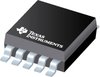
| Part Number | Manufacturer | Composite Price | Description | Compare |
|---|---|---|---|---|
| DAC8163TDSCR | Texas Instruments | $4.1425 | D/A Converter, 1 Func, Serial Input Loading, 7us Settling Time, PDSO10 | DAC8163TDSCT vs DAC8163TDSCR |
Part Details for DAC8163TDSCT by Texas Instruments
Results Overview of DAC8163TDSCT by Texas Instruments
- Distributor Offerings: (7 listings)
- Number of FFF Equivalents: (1 replacement)
- Tariff Estimator: (Available) NEW
- Number of Functional Equivalents: (2 options)
- CAD Models: (Request Part)
- Part Data Attributes: (Available)
- Reference Designs: (Not Available)
Tip: Data for a part may vary between manufacturers. You can filter for manufacturers on the top of the page next to the part image and part number.
Applications
Consumer Electronics
Industrial Automation
Audio and Video Systems
Financial Technology (Fintech)
DAC8163TDSCT Information
DAC8163TDSCT by Texas Instruments is a Digital to Analog Converter.
Digital to Analog Converters are under the broader part category of Converters.
A converter is an electrical circuit that transforms electric energy into a different form that will support a elecrical load needed by a device. Read more about Converters on our Converters part category page.
Price & Stock for DAC8163TDSCT
| Part # | Distributor | Description | Stock | Price | Buy | |
|---|---|---|---|---|---|---|
|
DISTI #
296-DAC8163TDSCT-ND
|
DigiKey | IC DAC 14BIT 10-WSON Min Qty: 1 Container: Cut Tape |
236 Cut Tape |
|
$8.7029 / $12.9200 | Buy Now |
|
DISTI #
296-DAC8163TDSTR-ND
|
DigiKey | IC DAC 14BIT 10-WSON Min Qty: 250 Container: Tape & Reel |
236 Tape & Reel |
|
$7.8929 / $8.3411 | Buy Now |
|
DISTI #
86278652
|
Verical | DAC 2-CH Resistor-String 14-bit 10-Pin WSON EP T/R RoHS: Compliant Min Qty: 41 Package Multiple: 1 Date Code: 1501 | Americas - 1011 |
|
$7.4500 / $9.3125 | Buy Now |
|
DISTI #
595-DAC8163TDSCT
|
Mouser Electronics | Digital to Analog Converters - DAC 14bit Dual DAC with TTL IOs A 595-DAC816 A 595-DAC8163TDSCR RoHS: Compliant | 0 |
|
$8.3500 | Order Now |
|
|
Rochester Electronics | IC DAC 2 CONV 14Bits String DAC 3-Wire Serial, DSP, MICROWIRE, QSPI, SPI 10-SON T/R RoHS: Compliant Status: Active Min Qty: 1 | 1011 |
|
$5.9600 / $7.4500 | Buy Now |
|
DISTI #
86278652
|
Verical | DAC 2-CH Resistor-String 14-bit 10-Pin WSON EP T/R RoHS: Compliant Min Qty: 41 Package Multiple: 1 Date Code: 1501 | Americas - 1011 |
|
$7.4500 / $9.3125 | Buy Now |
|
DISTI #
86278652
|
Verical | DAC 2-CH Resistor-String 14-bit 10-Pin WSON EP T/R RoHS: Compliant Min Qty: 41 Package Multiple: 1 Date Code: 1501 | Americas - 1011 |
|
$7.4500 / $9.3125 | Buy Now |
US Tariff Estimator: DAC8163TDSCT by Texas Instruments
Calculations from this tool are estimations only for imports into the United States. Please refer to the distributor or manufacturer and reference official US government sources and authorities to verify any final purchase costs.
DAC8163TDSCT Part Data Attributes
|
|
DAC8163TDSCT
Texas Instruments
Buy Now
Datasheet
|
Compare Parts:
DAC8163TDSCT
Texas Instruments
D/A Converter, 1 Func, Serial Input Loading, 7us Settling Time, PDSO10
|
| Pbfree Code | Yes | |
| Rohs Code | Yes | |
| Part Life Cycle Code | Active | |
| Package Description | Wson-10 | |
| ECCN Code | EAR99 | |
| HTS Code | 8542.39.00.40 | |
| Analog Output Voltage-Max | 5.5 V | |
| Analog Output Voltage-Min | ||
| Converter Type | D/A Converter | |
| Input Bit Code | BINARY | |
| Input Format | Serial | |
| JESD-30 Code | S-PDSO-N10 | |
| JESD-609 Code | e4 | |
| Length | 3 Mm | |
| Moisture Sensitivity Level | 2 | |
| Number of Bits | 14 | |
| Number of Functions | 1 | |
| Number of Terminals | 10 | |
| Operating Temperature-Max | 125 °C | |
| Operating Temperature-Min | -40 °C | |
| Package Body Material | Plastic/Epoxy | |
| Package Code | VSON | |
| Package Shape | Square | |
| Package Style | Small Outline, Very Thin Profile | |
| Peak Reflow Temperature (Cel) | 260 | |
| Sample Rate | 0.1 Mhz | |
| Seated Height-Max | 0.8 Mm | |
| Settling Time-Max | 7 µS | |
| Settling Time-Nom (tstl) | 7 µS | |
| Supply Voltage-Nom | 5.5 V | |
| Surface Mount | Yes | |
| Temperature Grade | Automotive | |
| Terminal Finish | Nickel/Palladium/Gold (Ni/Pd/Au) | |
| Terminal Form | No Lead | |
| Terminal Pitch | 0.5 Mm | |
| Terminal Position | Dual | |
| Time@Peak Reflow Temperature-Max (s) | 30 | |
| Width | 3 Mm |
Alternate Parts for DAC8163TDSCT
This table gives cross-reference parts and alternative options found for DAC8163TDSCT. The Form Fit Function (FFF) tab will give you the options that are more likely to serve as direct pin-to-pin alternates or drop-in parts. The Functional Equivalents tab will give you options that are likely to match the same function of DAC8163TDSCT, but it may not fit your design. Always verify details of parts you are evaluating, as these parts are offered as suggestions for what you are looking for and are not guaranteed.
DAC8163TDSCT Frequently Asked Questions (FAQ)
-
The recommended output buffer configuration is a 100 ohm resistor in series with a 10nF capacitor to GND. This configuration helps to filter out high-frequency noise and improve the overall signal-to-noise ratio.
-
To handle POR and BOR, ensure that the power supply voltage (VCC) is stable and within the recommended range before configuring the DAC. Also, use a capacitor (e.g., 10uF) between VCC and GND to filter out power supply noise.
-
The maximum clock frequency for the SPI interface is 50 MHz. To ensure reliable communication, use a clock frequency of 10 MHz or lower, and ensure that the clock signal is clean and free of noise. Also, use a pull-up resistor (e.g., 1k ohm) on the SCLK line.
-
To optimize the output voltage range and gain, use the internal reference voltage (VREF) or an external reference voltage. Adjust the gain setting ( Gain[2:0] bits in the DAC control register) to achieve the desired output voltage range. Consult the datasheet for specific gain settings and output voltage ranges.
-
The DAC8163TDSCT has a maximum junction temperature (TJ) of 150°C. To ensure reliable operation in high-temperature environments, use a heat sink or thermal pad, and ensure good airflow around the device. Also, reduce the power consumption by minimizing the output current and using a lower clock frequency.