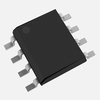
Part Details for L79L12ABD-R by STMicroelectronics
Results Overview of L79L12ABD-R by STMicroelectronics
- Distributor Offerings: (1 listing)
- Number of FFF Equivalents: (0 replacements)
- Tariff Estimator: (Available) NEW
- Number of Functional Equivalents: (0 options)
- CAD Models: (Request Part)
- Part Data Attributes: (Available)
- Reference Designs: (Not Available)
Tip: Data for a part may vary between manufacturers. You can filter for manufacturers on the top of the page next to the part image and part number.
L79L12ABD-R Information
L79L12ABD-R by STMicroelectronics is a Linear Regulator IC.
Linear Regulator ICs are under the broader part category of Power Circuits.
A power circuit delivers electricity in order to operate a load for an electronic device. Power circuits include transformers, generators and switches. Read more about Power Circuits on our Power Circuits part category page.
Price & Stock for L79L12ABD-R
| Part # | Distributor | Description | Stock | Price | Buy | |
|---|---|---|---|---|---|---|
|
|
Vyrian | Fixed Negative Standard Regulator, 12V, BIPolar, PDSO8 | 7427 |
|
RFQ |
US Tariff Estimator: L79L12ABD-R by STMicroelectronics
Calculations from this tool are estimations only for imports into the United States. Please refer to the distributor or manufacturer and reference official US government sources and authorities to verify any final purchase costs.
L79L12ABD-R Part Data Attributes
|
|
L79L12ABD-R
STMicroelectronics
Buy Now
Datasheet
|
Compare Parts:
L79L12ABD-R
STMicroelectronics
Fixed Negative Standard Regulator, 12V, BIPolar, PDSO8
|
| Part Life Cycle Code | Obsolete | |
| Part Package Code | SOIC | |
| Package Description | Lead Free, Sop-8 | |
| Pin Count | 8 | |
| ECCN Code | EAR99 | |
| HTS Code | 8542.39.00.60 | |
| Input Voltage-Max | 27 V | |
| Input Voltage-Min | 14.5 V | |
| JESD-30 Code | R-PDSO-G8 | |
| Length | 4.9 Mm | |
| Number of Functions | 1 | |
| Number of Terminals | 8 | |
| Operating Temperature TJ-Max | 125 °C | |
| Operating Temperature TJ-Min | -40 °C | |
| Output Current1-Max | 0.1 A | |
| Output Voltage1-Max | 12.6 V | |
| Output Voltage1-Min | 11.4 V | |
| Output Voltage1-Nom | 12 V | |
| Package Body Material | Plastic/Epoxy | |
| Package Code | SOP | |
| Package Shape | Rectangular | |
| Package Style | Small Outline | |
| Qualification Status | Not Qualified | |
| Regulator Type | Fixed Negative Single Output Standard Regulator | |
| Seated Height-Max | 1.75 Mm | |
| Surface Mount | Yes | |
| Technology | Bipolar | |
| Terminal Form | Gull Wing | |
| Terminal Pitch | 1.27 Mm | |
| Terminal Position | Dual | |
| Voltage Tolerance-Max | 5% | |
| Width | 3.9 Mm |
L79L12ABD-R Frequently Asked Questions (FAQ)
-
STMicroelectronics provides a recommended PCB layout in the application note AN4533, which includes guidelines for component placement, thermal management, and routing to minimize noise and ensure reliable operation.
-
The datasheet provides guidelines for capacitor selection, but it's essential to consider factors like ESR, ESL, and ripple current. A good rule of thumb is to choose capacitors with low ESR and ESL, and ensure they can handle the maximum ripple current. Consult the capacitor manufacturer's datasheet for specific recommendations.
-
While the datasheet specifies an operating temperature range of -40°C to 150°C, it's recommended to derate the device's performance at high temperatures. For reliable operation, it's best to keep the ambient temperature below 125°C to ensure the device stays within its thermal limits.
-
To ensure proper power-up and power-down sequencing, follow the guidelines in the datasheet. Typically, this involves powering up the input voltage (VIN) before the enable pin (EN), and powering down the enable pin before the input voltage. This helps prevent unwanted voltage transients and ensures reliable operation.
-
Common pitfalls include inadequate thermal management, poor PCB layout, incorrect capacitor selection, and insufficient input and output filtering. Additionally, failing to follow the recommended power-up and power-down sequencing, and not considering the device's thermal limitations can lead to reduced performance or even device failure.