Part Details for MAX11605EEE+ by Analog Devices Inc
Results Overview of MAX11605EEE+ by Analog Devices Inc
- Distributor Offerings: (3 listings)
- Number of FFF Equivalents: (0 replacements)
- Tariff Estimator: (Available) NEW
- Number of Functional Equivalents: (2 options)
- CAD Models: (Available)
- Part Data Attributes: (Available)
- Reference Designs: (Not Available)
Tip: Data for a part may vary between manufacturers. You can filter for manufacturers on the top of the page next to the part image and part number.
Applications
Education and Research
Internet of Things (IoT)
Industrial Automation
Computing and Data Storage
Aerospace and Defense
Healthcare
Renewable Energy
Telecommunications
Automotive
Robotics and Drones
MAX11605EEE+ Information
MAX11605EEE+ by Analog Devices Inc is an Analog to Digital Converter.
Analog to Digital Converters are under the broader part category of Converters.
A converter is an electrical circuit that transforms electric energy into a different form that will support a elecrical load needed by a device. Read more about Converters on our Converters part category page.
Price & Stock for MAX11605EEE+
| Part # | Distributor | Description | Stock | Price | Buy | |
|---|---|---|---|---|---|---|
|
DISTI #
700-MAX11605EEE
|
Mouser Electronics | Analog to Digital Converters - ADC 2.7V to 3.6V and 4.5V to 5.5V, Low-Power RoHS: Compliant | 191 |
|
$2.8500 / $5.1400 | Buy Now |
|
|
Analog Devices Inc | 2.7V to 3.6V and 4.5V to 5.5V, Package Multiple: 1 | 3524 |
|
$2.8589 / $5.1400 | Buy Now |
|
DISTI #
MAX11605EEE+
|
TME | IC: A/D converter, Ch: 12, 8bit, 188ksps, 2.7÷3.6V, QSOP16 Min Qty: 1 | 0 |
|
$2.8300 / $3.8700 | RFQ |
US Tariff Estimator: MAX11605EEE+ by Analog Devices Inc
Calculations from this tool are estimations only for imports into the United States. Please refer to the distributor or manufacturer and reference official US government sources and authorities to verify any final purchase costs.
Part Details for MAX11605EEE+
MAX11605EEE+ CAD Models
-
Part Symbol
-
Footprint
-
3D Model
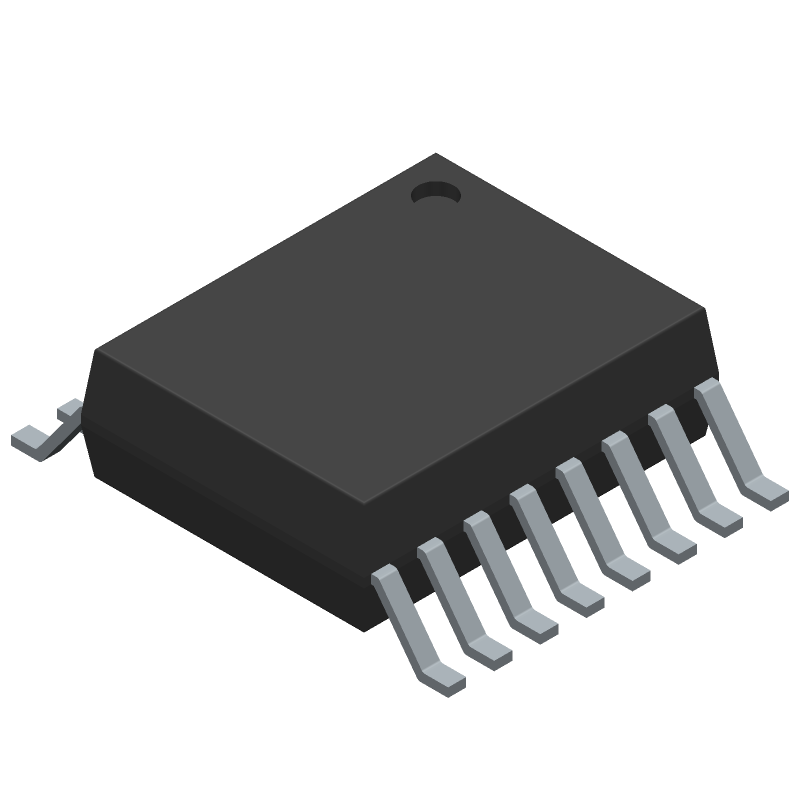
Available Download Formats
By downloading CAD models, you agree to our Terms & Conditions and Privacy Policy
MAX11605EEE+ Part Data Attributes
|
|
MAX11605EEE+
Analog Devices Inc
Buy Now
Datasheet
|
Compare Parts:
MAX11605EEE+
Analog Devices Inc
ADC, Successive Approximation, 8-Bit, 1 Func, 12 Channel, Serial Access, BICMOS, PDSO16
|
| Rohs Code | Yes | |
| Part Life Cycle Code | Active | |
| Part Package Code | 16-QSOP-150_MIL | |
| Package Description | Ssop, Ssop16,.25 | |
| Pin Count | 16 | |
| Manufacturer Package Code | 16-QSOP-150_MIL | |
| Reach Compliance Code | Compliant | |
| HTS Code | 8542.39.00.01 | |
| Date Of Intro | 2009-05-23 | |
| Analog Input Voltage-Max | 1.024 V | |
| Analog Input Voltage-Min | -1.024 V | |
| Conversion Time-Max | 6.1 µS | |
| Converter Type | Adc, Successive Approximation | |
| JESD-30 Code | R-PDSO-G16 | |
| JESD-609 Code | e3 | |
| Length | 4.89 Mm | |
| Linearity Error-Max (EL) | 0.3906% | |
| Moisture Sensitivity Level | 1 | |
| Number of Analog In Channels | 12 | |
| Number of Bits | 8 | |
| Number of Functions | 1 | |
| Number of Terminals | 16 | |
| Operating Temperature-Max | 85 °C | |
| Operating Temperature-Min | -40 °C | |
| Output Bit Code | BINARY, 2'S COMPLEMENT BINARY | |
| Output Format | Serial | |
| Package Body Material | Plastic/Epoxy | |
| Package Code | SSOP | |
| Package Equivalence Code | SSOP16,.25 | |
| Package Shape | Rectangular | |
| Package Style | Small Outline, Shrink Pitch | |
| Peak Reflow Temperature (Cel) | 260 | |
| Qualification Status | Not Qualified | |
| Sample Rate | 0.077 Mhz | |
| Sample and Hold / Track and Hold | Track | |
| Seated Height-Max | 1.75 Mm | |
| Supply Voltage-Nom | 3 V | |
| Surface Mount | Yes | |
| Technology | Bicmos | |
| Temperature Grade | Industrial | |
| Terminal Finish | Matte Tin (Sn) - Annealed | |
| Terminal Form | Gull Wing | |
| Terminal Pitch | 0.635 Mm | |
| Terminal Position | Dual | |
| Time@Peak Reflow Temperature-Max (s) | 30 | |
| Width | 3.9 Mm |
Alternate Parts for MAX11605EEE+
This table gives cross-reference parts and alternative options found for MAX11605EEE+. The Form Fit Function (FFF) tab will give you the options that are more likely to serve as direct pin-to-pin alternates or drop-in parts. The Functional Equivalents tab will give you options that are likely to match the same function of MAX11605EEE+, but it may not fit your design. Always verify details of parts you are evaluating, as these parts are offered as suggestions for what you are looking for and are not guaranteed.
| Part Number | Manufacturer | Composite Price | Description | Compare |
|---|---|---|---|---|
| MAX11605EEE/V+ | Analog Devices Inc | Check for Price | A/D Converter, 8-Bit, 1 Func, 12 Channel, Serial Access, BICMOS, PDSO16 | MAX11605EEE+ vs MAX11605EEE/V+ |
| MAX11605EEE+T | Analog Devices Inc | Check for Price | A/D Converter, 8-Bit, 1 Func, 12 Channel, Serial Access, BICMOS, PDSO16 | MAX11605EEE+ vs MAX11605EEE+T |
MAX11605EEE+ Frequently Asked Questions (FAQ)
-
The recommended layout and placement for the MAX11605EEE+ involves keeping the analog and digital grounds separate, using a solid ground plane, and placing the device close to the analog signal sources. Additionally, it's recommended to use a 4-layer PCB with a dedicated analog power plane and a dedicated digital power plane.
-
To optimize the performance of the MAX11605EEE+ in noisy environments, use a low-pass filter on the analog input, use a shielded cable for the analog input, and keep the device away from high-frequency noise sources. Additionally, consider using a ferrite bead or a common-mode choke on the power supply lines to reduce noise.
-
The maximum operating temperature range for the MAX11605EEE+ is -40°C to +125°C. However, the device's performance may degrade at extreme temperatures, and it's recommended to operate the device within the -20°C to +85°C range for optimal performance.
-
Yes, the MAX11605EEE+ can be used with a 3.3V power supply. However, the device's performance may be affected, and the maximum sampling rate may be reduced. It's recommended to use a 5V power supply for optimal performance.
-
The MAX11605EEE+ can be programmed using the SPI interface. The device has a set of registers that can be written to set the gain and offset settings. The programming sequence involves writing the desired values to the corresponding registers using the SPI interface. Refer to the datasheet for the register map and programming sequence.