| Part Number | Manufacturer | Composite Price | Description | Compare |
|---|---|---|---|---|
| MJD32C-13 | Diodes Incorporated | $0.2965 | Power Bipolar Transistor, 3A I(C), 100V V(BR)CEO, 1-Element, PNP, Silicon, TO-252, Plastic/Epoxy, 2 Pin | MJD32C vs MJD32C-13 |
| MJD32CT4G | onsemi | $0.3896 | Power Bipolar Transistor, 3A I(C), 100V V(BR)CEO, 1-Element, PNP, Silicon, Plastic/Epoxy, 2 Pin | MJD32C vs MJD32CT4G |
| NJVMJD32CT4G | onsemi | $0.3996 | Power Bipolar Transistor, 3A I(C), 100V V(BR)CEO, 1-Element, PNP, Silicon, Plastic/Epoxy, 2 Pin | MJD32C vs NJVMJD32CT4G |
| NJVMJD32T4G | onsemi | $0.4191 | Power Bipolar Transistor, 3A I(C), 100V V(BR)CEO, 1-Element, PNP, Silicon, Plastic/Epoxy, 2 Pin | MJD32C vs NJVMJD32T4G |
| MJD32CT4 | STMicroelectronics | $0.4347 | Power Bipolar Transistor, 3A I(C), 100V V(BR)CEO, 1-Element, PNP, Silicon, TO-252AA, Plastic/Epoxy, 2 Pin | MJD32C vs MJD32CT4 |
| MJD32CRL | onsemi | Check for Price | Power Bipolar Transistor, 3A I(C), 100V V(BR)CEO, 1-Element, PNP, Silicon, Plastic/Epoxy, 2 Pin | MJD32C vs MJD32CRL |
| MJD32CT4 | onsemi | Check for Price | Power Bipolar Transistor, 3A I(C), 100V V(BR)CEO, 1-Element, PNP, Silicon, Plastic/Epoxy, 2 Pin | MJD32C vs MJD32CT4 |
| MJD32C-TP | Micro Commercial Components | Check for Price | Power Bipolar Transistor, 3A I(C), 100V V(BR)CEO, 1-Element, PNP, Silicon, Plastic/Epoxy, 3 Pin | MJD32C vs MJD32C-TP |
| CJD32C | Central Semiconductor Corp | Check for Price | Power Bipolar Transistor, 3A I(C), 100V V(BR)CEO, 1-Element, PNP, Silicon, Plastic/Epoxy, 2 Pin | MJD32C vs CJD32C |
| CJD32CBK | Central Semiconductor Corp | Check for Price | Power Bipolar Transistor, 3A I(C), 100V V(BR)CEO, 1-Element, PNP, Silicon, Plastic/Epoxy, 2 Pin | MJD32C vs CJD32CBK |
Part Details for MJD32C by STMicroelectronics
Results Overview of MJD32C by STMicroelectronics
- Distributor Offerings: (3 listings)
- Number of FFF Equivalents: (10 replacements)
- Tariff Estimator: (Available) NEW
- Number of Functional Equivalents: (10 options)
- CAD Models: (Request Part)
- Part Data Attributes: (Available)
- Reference Designs: (Not Available)
Tip: Data for a part may vary between manufacturers. You can filter for manufacturers on the top of the page next to the part image and part number.
MJD32C Information
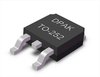
MJD32C by STMicroelectronics is a Power Bipolar Transistor.
Power Bipolar Transistors are under the broader part category of Transistors.
A transistor is a small semiconductor device used to amplify, control, or create electrical signals. When selecting a transistor, factors such as voltage, current rating, gain, and power dissipation must be considered, with common types. Read more about Transistors on our Transistors part category page.
Price & Stock for MJD32C
| Part # | Distributor | Description | Stock | Price | Buy | |
|---|---|---|---|---|---|---|
|
DISTI #
MJD32C-ND
|
DigiKey | TRANS PNP 100V 3A DPAK Container: Tape & Reel |
0 Tape & Reel |
|
Buy Now | |
|
DISTI #
MJD32C
|
Avnet Americas | - Rail/Tube (Alt: MJD32C) COO: China RoHS: Compliant Min Qty: 3000 Package Multiple: 3000 Container: Tube | 0 |
|
RFQ | |
|
|
Quest Components | TRANSISTOR,BJT,PNP,100V V(BR)CEO,3A I(C),TO-252 | 535 |
|
$0.1834 / $0.3930 | Buy Now |
US Tariff Estimator: MJD32C by STMicroelectronics
Calculations from this tool are estimations only for imports into the United States. Please refer to the distributor or manufacturer and reference official US government sources and authorities to verify any final purchase costs.
MJD32C Part Data Attributes
|
|
MJD32C
STMicroelectronics
Buy Now
Datasheet
|
Compare Parts:
MJD32C
STMicroelectronics
Power Bipolar Transistor, 3A I(C), 100V V(BR)CEO, 1-Element, PNP, Silicon, TO-252, Plastic/Epoxy, 2 Pin
|
| Rohs Code | Yes | |
| Part Life Cycle Code | Obsolete | |
| Part Package Code | TO-252 | |
| Package Description | Dpak-3 | |
| Pin Count | 3 | |
| ECCN Code | EAR99 | |
| HTS Code | 8541.29.00.95 | |
| Case Connection | Collector | |
| Collector Current-Max (IC) | 3 A | |
| Collector-Emitter Voltage-Max | 100 V | |
| Configuration | Single | |
| DC Current Gain-Min (hFE) | 10 | |
| JEDEC-95 Code | TO-252 | |
| JESD-30 Code | R-PSSO-G2 | |
| JESD-609 Code | e3 | |
| Number of Elements | 1 | |
| Number of Terminals | 2 | |
| Operating Temperature-Max | 150 °C | |
| Package Body Material | Plastic/Epoxy | |
| Package Shape | Rectangular | |
| Package Style | Small Outline | |
| Polarity/Channel Type | Pnp | |
| Power Dissipation Ambient-Max | 15 W | |
| Qualification Status | Not Qualified | |
| Surface Mount | Yes | |
| Terminal Finish | Matte Tin (Sn) | |
| Terminal Form | Gull Wing | |
| Terminal Position | Single | |
| Transistor Application | Switching | |
| Transistor Element Material | Silicon | |
| VCEsat-Max | 1.2 V |
Alternate Parts for MJD32C
This table gives cross-reference parts and alternative options found for MJD32C. The Form Fit Function (FFF) tab will give you the options that are more likely to serve as direct pin-to-pin alternates or drop-in parts. The Functional Equivalents tab will give you options that are likely to match the same function of MJD32C, but it may not fit your design. Always verify details of parts you are evaluating, as these parts are offered as suggestions for what you are looking for and are not guaranteed.
MJD32C Frequently Asked Questions (FAQ)
-
The recommended operating temperature range for the MJD32C is -40°C to 150°C, but it can withstand storage temperatures from -55°C to 175°C.
-
The thermal pad should be connected to a copper area on the PCB to dissipate heat. Ensure the thermal pad is not connected to any signal or power traces, and use a thermal interface material (TIM) to improve heat transfer.
-
The maximum allowed voltage on the MJD32C's input pins is 5.5V, which is the absolute maximum rating. However, it's recommended to keep the input voltage below 5V to ensure reliable operation.
-
You can implement overcurrent protection using an external current sense resistor and a comparator or a dedicated overcurrent protection IC. The MJD32C does not have built-in overcurrent protection.
-
Keep the power and ground traces as short and wide as possible, and use a solid ground plane to reduce noise and improve thermal dissipation. Avoid routing power and ground traces near sensitive analog signals.